We Were Here Tomorrow puzzle solution: Help Guide
Looking for a We Were Here Tomorrow puzzle solution? Check source limits, avoid older-game answers, and use a practical co-op troubleshooting method.
The wrong walkthrough can leave you more stuck than the puzzle itself. Finding a reliable We Were Here Tomorrow puzzle solution matters because search results can mix Tomorrow footage with guides for the original We Were Here. This We Were Here Tomorrow puzzle solution guide separates what the available material actually confirms from practical co-op troubleshooting, so you can make progress without trusting an invented code or an unrelated lever sequence.
What Is Actually Verified About Tomorrow?
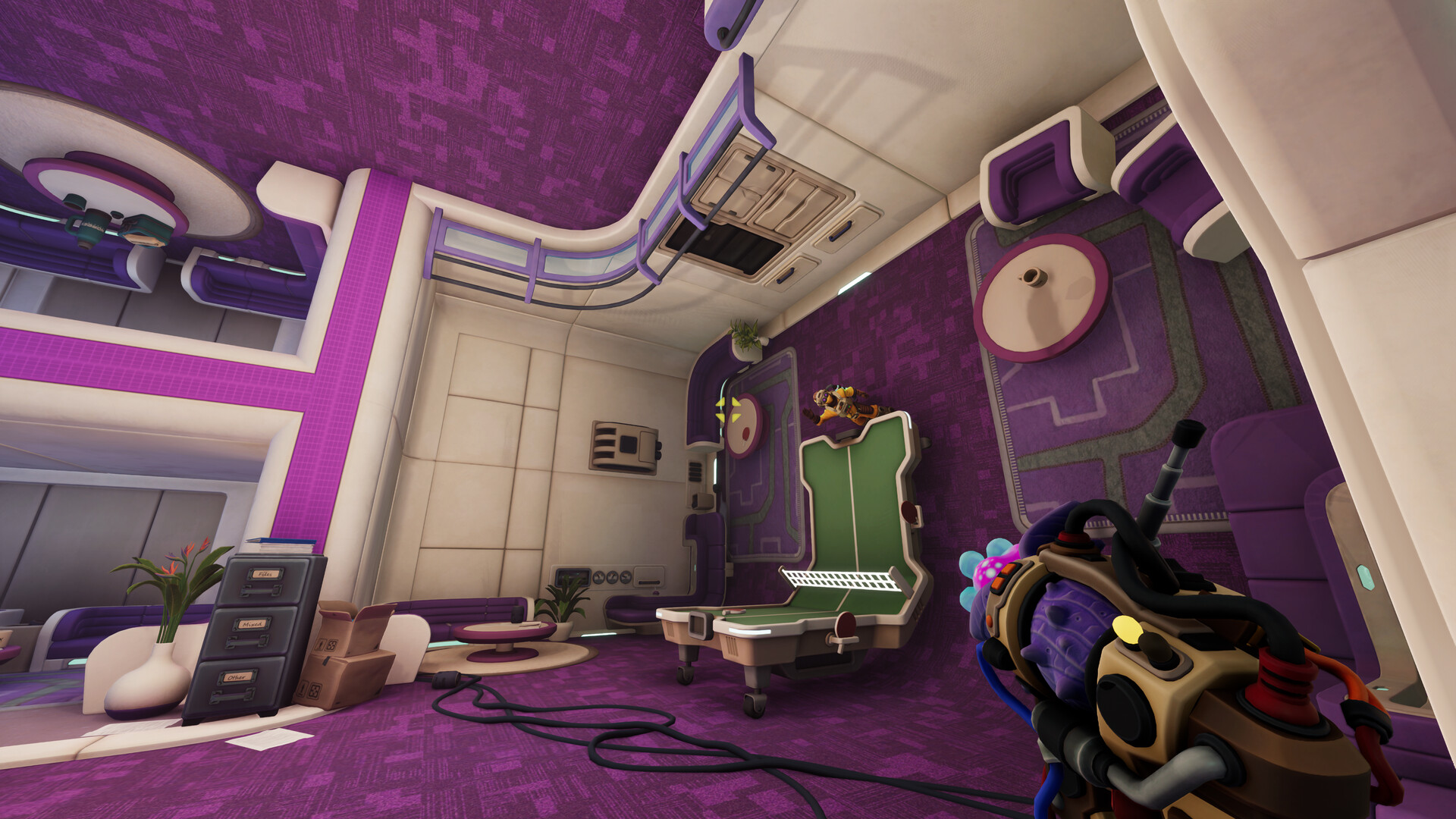
Official screenshot · Source: Steam store
The available reference material does not establish any exact puzzle solutions for We Were Here Tomorrow. It includes a short video transcript about an experimental reactor, time rifts, and Nortek, but no observable puzzle inputs, completed sequences, or room-by-room instructions.
That distinction matters: a video labeled “full walkthrough” is not enough to verify a solution when the accessible transcript contains only introductory dialogue.
The other references concern the original We Were Here. One is a community walkthrough; the other returned an access-block page rather than readable guide content.
| Reference | What the available material contains | What it can support |
|---|---|---|
| Tomorrow gameplay video | Dialogue mentioning an unstable experimental reactor, time rifts, and Nortek | Limited story context |
| Original-game Steam community guide | Player-written instructions for older puzzles | Comparisons with the original game, not Tomorrow solutions |
| Original-game TrueAchievements page | An access-block message | No usable walkthrough evidence |
The supplied Tomorrow gameplay video is therefore a starting point for checking footage, not proof of a particular button order. For official franchise information, consult the We Were Here series website.
What the introductory dialogue does—and does not—tell you
The transcript establishes that the characters are being asked to help with a dangerous reactor and that stabilizing a time rift is presented as a possible way home.
It does not establish:
- How any reactor controls work.
- Whether rift stabilization is a playable puzzle, a narrative objective, or both.
- Which symbols, colors, or numbers belong in a solution.
- Whether answers change between sessions.
- Whether a particular room has a timer or failure penalty.
If you need an exact We Were Here Tomorrow puzzle solution, those missing details are essential. Treat any precise answer unsupported by matching gameplay footage with caution.
Check That Your Walkthrough Matches Your Game
Before entering a code, identify the game and the specific puzzle. Similar titles are an easy source of confusion, especially when older guides rank alongside newer searches.
The supplied Steam guide was originally published in 2017 and updated in 2021. Its instructions describe the original We Were Here, not Tomorrow. Those dates and the game title are stronger identification clues than a search-result snippet.
Recognize an older-game guide
The following details appear in the supplied original-game walkthrough. They are community reports about the original game, not verified Tomorrow mechanics.
| Detail in a guide | What the community source describes | How to use that information |
|---|---|---|
| Explorer and Librarian roles | Partners exchanging information across different rooms | Check whether the guide is for the original game |
| A painting and selectable symbols | Matching an image with corresponding symbols | Do not assume its symbol answers apply to Tomorrow |
| Colored basement valves | Combining colors to match a door instruction | Verify the game before copying a valve combination |
| A labyrinth with colored levers | A prescribed lever sequence | Treat it as an older-game answer |
| Chess in a freezing environment | Activating a generator and moving pieces | Do not mistake this for a confirmed Tomorrow puzzle |
| A theater and approaching marionette | Arranging scenes under pressure | Confirm the title before following stage instructions |
A useful We Were Here Tomorrow puzzle solution should match more than a broad theme. Look for the same room layout, control labels, clue arrangement, and starting state.
A generic screenshot of machinery is not enough. Two puzzles can both contain a console while requiring entirely different reasoning.
Quick identity check:
- Read the guide’s full title.
- Check its publication and update dates.
- Compare the room against your screen.
- Confirm that both partners’ views match the walkthrough.
- Stop if the guide introduces objects absent from your session.
This takes less effort than undoing several unsupported inputs.
Build a Usable Co-op Puzzle Record
Without a verified answer, the most productive next step is to document what both players can actually see. The method below is general co-op puzzle-solving advice, not a claim that Tomorrow contains every interface described.
A useful puzzle record separates observations from interpretations. “Three lights are flashing” is an observation. “We need to press three buttons” is a hypothesis.
Keeping those separate helps prevent a plausible guess from becoming an assumed rule.
Start with a two-player inventory
Have each player describe their area before either changes anything. Record visible writing exactly, including punctuation, arrows, repeated symbols, and line breaks when they appear meaningful.
| Information to record | Example description | Why it helps |
|---|---|---|
| Objective wording | Copy the instruction exactly | Preserves restrictions that a paraphrase might miss |
| Available controls | Buttons, switches, dials, or other interactable objects | Defines what actions are possible |
| Symbols | “Open circle with a short downward line” | Avoids ambiguous nicknames |
| Spatial arrangement | Top row, second position from the left | Establishes a shared reference |
| Current state | Indicator lit, pointer centered, door closed | Makes before-and-after comparisons possible |
| Response to an action | Sound, movement, text, or no visible change | Provides evidence for the next test |
For a We Were Here Tomorrow puzzle solution request, this record is more useful than “the machine puzzle is broken.” It gives another player enough information to identify the situation and explain their reasoning.
Agree on orientation before giving directions
“Left” becomes unreliable when partners view an object from opposite sides.
Choose a reference point first: the entrance, a clearly labeled edge, or a numbered position. If a diagram has a top, agree on what defines it.
For an unlabeled row, you might establish:
- Positions run from left to right while facing the controls.
- Rows run from top to bottom.
- Rotated symbols are described by their visible orientation.
- Movement directions refer to the moving player’s perspective.
These are communication conventions, not confirmed game rules. Their purpose is to eliminate avoidable misunderstandings.
Test Ideas Without Losing Track of the State
Once both players have recorded the clues, form one hypothesis at a time. Avoid changing several controls together unless the visible instructions explicitly require a simultaneous action.
This is a troubleshooting framework, not a verified We Were Here Tomorrow puzzle solution. Its value is that it helps you distinguish a wrong interpretation from a wrong input.
Use an observe–predict–test cycle
| Step | Action | What to record |
|---|---|---|
| 1. Observe | Describe the current state without interacting | Exact labels, positions, and indicators |
| 2. Interpret | Explain how one clue might relate to one control | The proposed relationship |
| 3. Predict | State what should happen if the idea is right | A specific expected response |
| 4. Test | Make the smallest meaningful change | The precise input |
| 5. Compare | Check both players’ views | Whether the prediction matched |
| 6. Revise | Keep or reject the hypothesis | Evidence, not just confidence |
For example, imagine a generic puzzle with a numbered diagram and matching switches. Before assuming the numbers indicate activation order, ask whether they could instead identify locations or quantities.
A prediction makes that distinction testable: “If this number means order, this should be our first input.” If the response contradicts that expectation, reconsider the interpretation rather than repeating it faster.
Keep a short attempt log
A simple record prevents circular guessing:
| Attempt | Hypothesis | Input | Observed result |
|---|---|---|---|
| A | Symbols indicate order | First matching control | Record what changed |
| B | Symbols indicate positions | Control at the matching location | Compare with attempt A |
| C | Orientation matters | Reinterpret the rotated symbol | Check both screens |
Do not assume that resetting restores every element. If a reset option exists, compare the resulting state with your original notes.
Likewise, do not assume an unsuccessful action is harmless. Check for visible warnings or consequences before experimenting.
Troubleshoot a Stuck Puzzle and Find Better Help
When an apparent solution fails, resist the urge to repeat it immediately. First determine whether the problem is identification, communication, interpretation, or execution.
| Symptom | Possible explanation | Next check |
|---|---|---|
| Your partner cannot find the described symbol | Different naming or orientation | Describe its strokes and rotation |
| The correct-looking sequence fails | The starting state differs | Compare all controls with your notes |
| Nothing visibly happens | Feedback may appear elsewhere | Ask the other player what changed |
| A walkthrough shows different objects | Wrong room or wrong game | Recheck the title and footage |
| An instruction is ambiguous | A word or spatial relationship was lost | Read the original clue aloud |
| Repeated attempts give confusing results | Too many variables changed | Return to the last documented state, if possible |
A trustworthy We Were Here Tomorrow puzzle solution should explain the connection between the clue and the answer. A bare sequence may be impossible to assess if your starting conditions differ.
Make a targeted help request
When asking another player for assistance, include:
- The exact game title.
- A room or objective name, if displayed.
- Screenshots from both players.
- The full clue text.
- Current control positions.
- Inputs already attempted and their results.
- Whether you want a hint or a complete spoiler.
A strong request might read:
“We’re playing Tomorrow and are stuck at the controls shown in these two screenshots. The visible instruction says [exact text]. We tried [input], which changed [result]. Can someone explain the clue relationship before giving the full answer?”
This is also a useful standard for evaluating community reports. Prefer accounts that show matching evidence over confident answers with no context.
FAQ: We Were Here Tomorrow Puzzle Solution Help
Is there a verified We Were Here Tomorrow puzzle solution in these references?
No. The available Tomorrow transcript provides introductory story dialogue, not puzzle steps. Exact codes, symbol orders, reactor settings, and rift-stabilization inputs cannot be verified from it. The practical methods above are clearly separated from confirmed game-specific information.
Can I use the original We Were Here walkthrough?
Not as a Tomorrow walkthrough. The supplied community guide covers the original game’s paintings, valves, labyrinth, chess, and theater puzzles. Its general lesson—communicate clearly with your partner—may be useful, but its specific answers should not be transferred without matching evidence.
What should I do if a video claims to be a full walkthrough?
Check the actual footage for your room, both players’ relevant clues, and the successful inputs. A title alone does not verify coverage. In this case, the accessible transcript does not contain the steps needed to reproduce a solution.
What information is most useful when I am stuck?
Provide both players’ views, exact clue wording, the current puzzle state, and a brief attempt log. Those details make it easier to distinguish a missed clue from an execution mistake—and help someone give you a useful hint instead of another unsupported guess.
Related Guides
We Were Here Tomorrow cable puzzle: Co-op Tips
Stuck on the We Were Here Tomorrow cable puzzle? Use clear callouts, connection notes, and controlled tests while avoiding unverified solutions.
We Were Here Tomorrow chemical puzzle: Co-op Help
Stuck on the We Were Here Tomorrow chemical puzzle? Get practical co-op troubleshooting tips and learn which solution details remain unverified.
We Were Here Tomorrow computer puzzle: Disk & Dial Guide
Solve the We Were Here Tomorrow computer puzzle with floppy disk setup, timed dial directions, co-op tips, and the next 3D printer steps.
We Were Here Tomorrow release date demo: Launch Guide
Get We Were Here Tomorrow's release date, limited-time demo details, Steam price, co-op requirements, and PC specs before teaming up.
We Were Here Tomorrow puzzle guide: Early Solutions
Solve the opening wellness check, R&D circuits, chemical recipe, timed dials, and green access pass puzzles with clear co-op instructions.