We Were Here Tomorrow cable puzzle: Co-op Tips
Stuck on the We Were Here Tomorrow cable puzzle? Use clear callouts, connection notes, and controlled tests while avoiding unverified solutions.
The We Were Here Tomorrow cable puzzle can bring your session to a standstill when you and your partner cannot agree on what you’re looking at. Clear descriptions matter because this cooperative adventure gives its two players different information and tools. If you’re searching for a We Were Here Tomorrow cable puzzle solution, here’s the essential caveat: the available references do not document its exact connections, cable order, or activation sequence.
This guide offers a practical, spoiler-light troubleshooting method—not a verified walkthrough. You’ll learn how to compare observations, record possible connections, and test ideas without losing track of what changed.
What Is Confirmed About the Cable Puzzle?
The available coverage establishes how We Were Here Tomorrow approaches cooperation, but it does not establish a cable-specific solution.
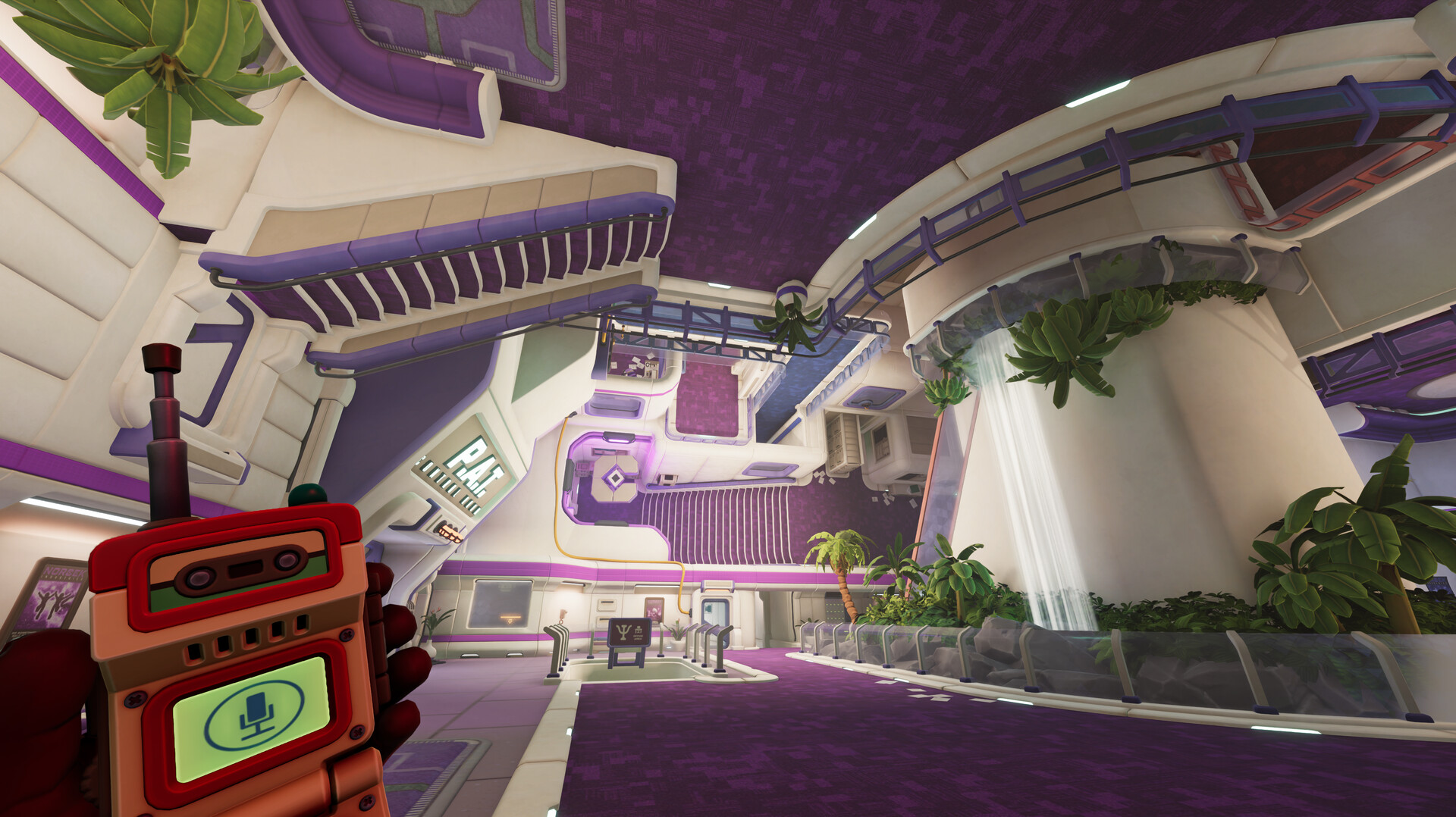
Official screenshot · Source: Steam store
In GameRant’s six-hour hands-on preview of We Were Here Tomorrow, the writer describes a two-player adventure where explorers frequently communicate from separate locations. Each player has different capabilities, and progress depends on combining their contributions.
That supports communication advice. It does not support publishing a particular wiring diagram as fact.
| Topic | What the references establish | What remains unverified |
|---|---|---|
| Cooperative structure | Two players share information and solve challenges together | The exact division of roles in a cable room |
| Player equipment | Different tools contribute to puzzles and traversal | Whether a specific tool is required for cable connections |
| Puzzle design | Some challenges involve reasoning through linked effects | The rules governing any cable-specific sequence |
| Exact solution | No cable walkthrough appears in the references | Cable colors, socket assignments, timing, and completion steps |
The preview also describes a beam-redirection puzzle involving movable pylons. That is a separate documented example—not evidence that cables follow the same rules.
For the We Were Here Tomorrow cable puzzle, no exact connection order can be verified from these sources. Treat any instructions below as a general problem-solving framework, and use only the parts that match what is actually on your screen.
Before Touching Anything, Build a Shared Map
Your first useful move is not necessarily interacting with a cable. It is making sure both players can describe the same object without ambiguity.
“Use the left connection” sounds precise until your partner faces the opposite direction. Likewise, “the blue one” becomes unreliable if several objects share that color or appear different under the room’s lighting.
Agree on one reference point
Choose a visible landmark and define your directions relative to it. Depending on the room, that might be an entrance, a large display, or a clearly marked panel.
For example:
- “Left and right mean while facing the panel.”
- “We’ll describe rows from top to bottom.”
- “If there are no printed labels, we’ll assign temporary numbers.”
- “We’ll distinguish the cable’s starting point from its destination.”
These are communication conventions, not confirmed features of the puzzle.
For a We Were Here Tomorrow cable puzzle attempt, this small agreement can prevent you from testing the wrong connection while believing your reasoning failed.
Separate observations from interpretations
Report what you can see before explaining what you think it means.
Compare these statements:
- Observation: “There’s a triangle printed beside this connection.”
- Interpretation: “I think the triangle identifies its destination.”
- Proposed test: “Let’s check whether your side has the same triangle.”
That distinction keeps a plausible theory from turning into an assumed rule.
| Detail to record, if present | Useful description | Ambiguous description |
|---|---|---|
| Position | “Second connection from the top” | “That middle one” |
| Printed symbol | “An outlined triangle” | “The pointy thing” |
| Color | “Blue, beside the triangle” | “Blue” |
| Cable path | “Starts here and disappears behind the panel” | “Goes over there” |
| Feedback | “The lower indicator changed after the action” | “Something happened” |
Use multiple identifiers when possible. Position plus a symbol is usually easier to confirm than color alone.
A Step-by-Step Method for Testing Connections
Once you have a shared vocabulary, use a repeatable process. The aim is to learn something from every action rather than cycle through guesses.
This We Were Here Tomorrow cable puzzle method is deliberately conditional: if the room does not contain movable cables, labeled sockets, or visible feedback, don’t assume those mechanics exist.
1. Inventory both players’ information
Before interacting, each player should describe:
- Objects that appear usable.
- Labels, diagrams, symbols, or instructions.
- Anything visible from one position but not another.
- Current lights, display states, or other feedback.
- Routes or viewpoints you have not inspected.
Do not assume the person standing beside a mechanism has all the information needed to operate it. The game’s asymmetric structure makes comparing both perspectives worthwhile.
2. Write down the rule you are testing
Turn a vague idea into a specific prediction.
For example: “We think this symbol identifies the matching endpoint. If that is correct, connecting the matching pair should produce a visible response.”
That is a hypothetical test, not a known puzzle rule. Its value is that both players understand what would support or weaken the idea.
3. Change one thing at a time
Where the game allows it, make a single adjustment and pause. Ask your partner to check their side before doing anything else.
If several connections change together, any resulting feedback becomes harder to interpret. You may discover that something worked without knowing which change mattered.
4. Record the result accurately
“No visible change” is a valid observation. It does not automatically mean “wrong.”
A mechanism might depend on another condition, or the feedback might appear somewhere your partner can see. Neither explanation is confirmed here; both are reasons to avoid drawing conclusions too quickly.
| Stage | Action | Question to answer |
|---|---|---|
| Observe | Describe the starting state | What is currently visible? |
| Predict | State one possible rule | What should happen if we’re right? |
| Confirm | Repeat the planned action | Are we discussing the same objects? |
| Test | Make one permitted change | What changed on either side? |
| Review | Compare result with prediction | Should we keep, revise, or reject the idea? |
5. Preserve useful progress
If you observe a meaningful change, note the configuration before experimenting further. A quick written record can prevent you from forgetting which arrangement produced it.
Avoid assuming there is a reset button, a penalty-free restart, or an unlimited number of attempts. The references do not establish those details.
Keep a Connection Log and Use Better Callouts
A small connection log is more useful than a long conversation built around “the other one.” It gives both players a stable record to consult.
The following is a fictional example, not an actual We Were Here Tomorrow cable puzzle solution:
| Test | Proposed relationship | Observation | Next step |
|---|---|---|---|
| A | Symbol X corresponds to endpoint 1 | No visible change on either side | Recheck the symbol comparison |
| B | Symbol X corresponds to endpoint 2 | One indicator changed | Record the arrangement and inspect |
| C | A second adjustment completes the pattern | Earlier indicator returned to its previous state | Check whether the changes interact |
The point is not the invented labels. It is the separation between the proposed relationship and the observed result.
Keep your real notes short enough to use during play. Record only what helps you identify the objects, remember the test, and compare outcomes.
Use a closed-loop exchange
A reliable callout has three parts:
- Describe: “I’m looking at the connection beside the triangle.”
- Confirm: “You mean the upper triangle, while facing the panel?”
- Act and report: “Yes. I’ll change that one now. Tell me what changes.”
This is more dependable than giving several instructions at once.
When possible, let one player operate while the other watches for feedback, then swap responsibilities if a different viewpoint would help. These are temporary teamwork roles, not official character assignments.
For the We Were Here Tomorrow cable puzzle, the goal is to keep both players involved: one person’s action may be less useful than the other person’s observation.
What to Check When You’re Still Stuck
If your tests stop producing new information, pause the interactions and audit your assumptions.
Recheck orientation before changing the theory
Ask each player to identify the same reference point again. A mirrored description can make a sensible plan look completely wrong.
Instead of saying “left,” say “the side nearest the entrance” or use a printed label, if available. Don’t keep testing a theory until you know both players are applying it to the same objects.
Look beyond color
If you have been matching objects only by color, inspect them for additional distinguishing details. Symbols, placement, labels, and visible routes may help—but only if they actually appear in your room.
There is no verified evidence here that the cable puzzle uses color matching. A familiar visual pattern is a clue to investigate, not proof of a rule.
Revisit the other player’s area
Ask your partner to describe anything you have not discussed yet. That could include an overlooked display, another viewpoint, or an object they assumed was irrelevant.
The hands-on preview emphasizes that knowing an answer is not enough when both players must contribute. Your bottleneck may be missing information rather than faulty logic.
Don’t treat tool abilities as a universal answer
The preview confirms complementary abilities involving blocks and hooking or pulling objects. It does not confirm their role in the cable puzzle.
If access appears to be the problem, inspect your available tools and the environment. If access is not the problem, don’t force a tool-based explanation.
Avoid unsupported bug diagnoses
A mechanism that does not respond is not automatically broken. First check your shared map, the starting configuration, and any instructions you can actually see.
The available references do not establish a cable-puzzle bug or a reliable technical workaround.
The best next step for a stalled We Were Here Tomorrow cable puzzle attempt is to gather better evidence: screenshots from both perspectives, exact visible labels, and a short list of actions already tried. Those details are far more useful for identifying a solution than “we connected everything.”
FAQ: We Were Here Tomorrow Cable Puzzle
What is the exact We Were Here Tomorrow cable puzzle solution?
The provided references do not document an exact solution. They contain no verified wiring diagram, socket order, or activation sequence. A specific connection list would therefore be speculative. Use the room’s actual clues and both players’ observations to establish the rules.
Should we match cables by color?
Only if the puzzle provides evidence that color determines the connections. The references do not confirm a color-matching mechanic. Compare any visible symbols, labels, positions, and diagrams before deciding what a color means.
Does the cable puzzle require both players?
The game is built around two-player cooperation, frequently with different information and abilities. However, the available coverage does not describe the cable puzzle’s precise role split. Have both players report their observations rather than assuming one side contains everything needed.
What should we do before trying another connection?
Confirm your reference point, state the rule you’re testing, and agree on the exact object to change. Then make one adjustment, check both perspectives, and record the result. A clear test that teaches you something is more valuable than several unexplained guesses.
Related Guides
We Were Here Tomorrow chemical puzzle: Co-op Help
Stuck on the We Were Here Tomorrow chemical puzzle? Get practical co-op troubleshooting tips and learn which solution details remain unverified.
We Were Here Tomorrow computer puzzle: Disk & Dial Guide
Solve the We Were Here Tomorrow computer puzzle with floppy disk setup, timed dial directions, co-op tips, and the next 3D printer steps.
We Were Here Tomorrow crystal puzzle solution
Check the game-title mismatch, then solve the documented five-crystal puzzle in We Were Here Together with clear co-op steps and reset tips.
We Were Here Tomorrow announcement: Release Details
Explore the We Were Here Tomorrow announcement, October 20 release, crossplay plans, co-op puzzles, Steam pricing, and PC requirements.
We Were Here Tomorrow demo walkthrough: Guide & Tips
Find the right We Were Here Tomorrow demo walkthrough, avoid wrong-game solutions, and use a practical checklist to work through co-op puzzles.