We Were Here Tomorrow laser puzzle: Co-op Beam Guide
Understand the We Were Here Tomorrow laser puzzle with confirmed mechanics, practical beam-routing tips, and clear co-op communication strategies.
Start With the Beam, Not Random Pylon Moves
One misplaced pylon can make a beam-routing puzzle feel impossible. The We Were Here Tomorrow laser puzzle challenges you and your partner to understand how redirecting a beam changes the path through different targets. This We Were Here Tomorrow laser puzzle guide separates confirmed mechanics from suggested solving techniques, helping you approach the room methodically without relying on an invented solution.
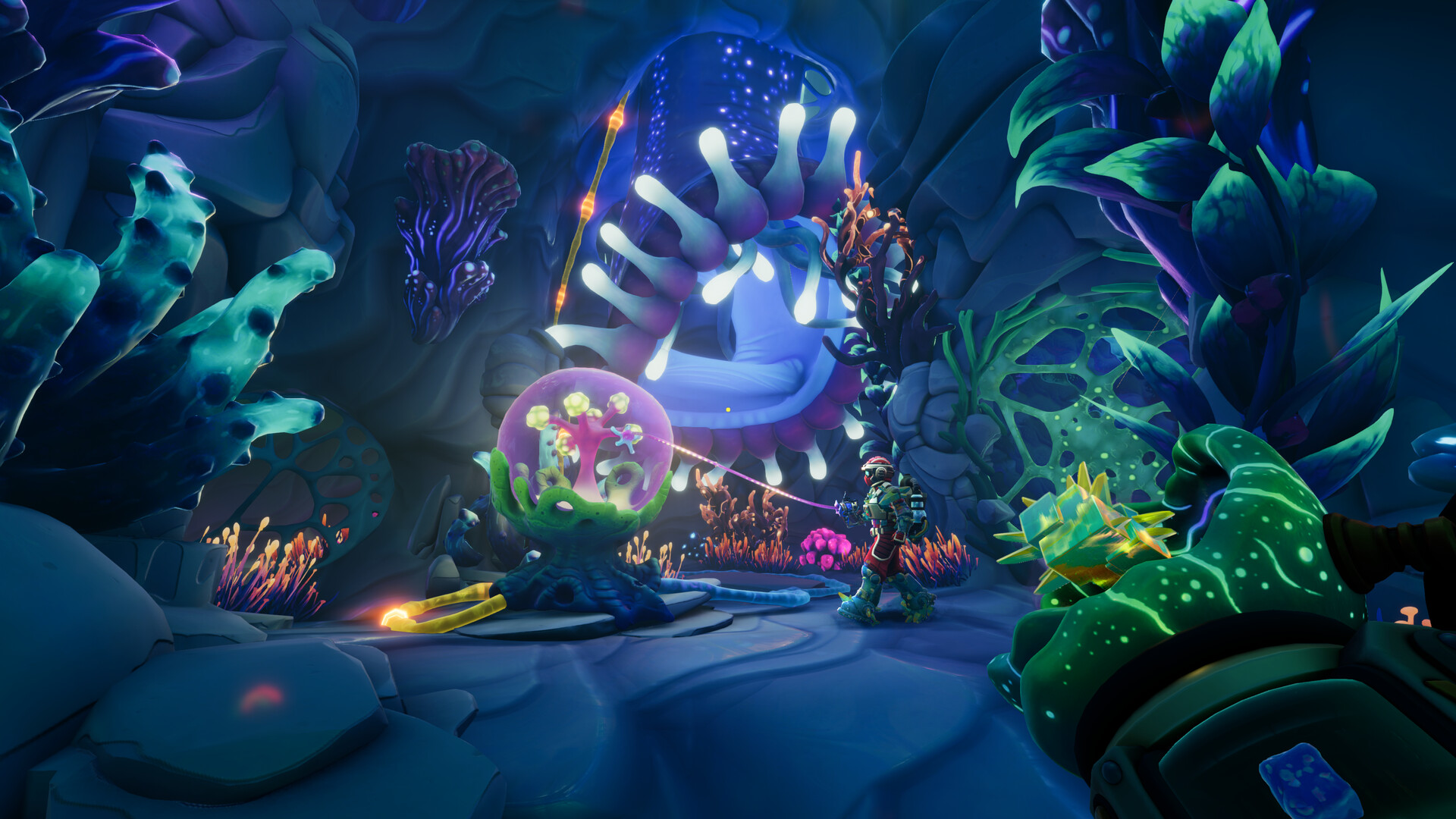
Official screenshot · Source: Steam store
The core approach: identify the beam’s starting point, inspect the available pylons and targets, and test one adjustment at a time while your partner reports the result.
There is an important limitation: the available reference material describes the puzzle’s concept, but does not reveal a complete room layout, numbered pylon positions, or a verified winning sequence. What follows is a spoiler-light strategy guide—not a frame-by-frame walkthrough.
That distinction matters. An unsupported instruction such as “move the second pylon left” could leave you more confused than before. A repeatable observation-and-testing process gives you something useful to apply to the room you actually see.
What Is Confirmed About the Laser Puzzle?
The clearest description comes from Game Rant’s six-hour We Were Here Tomorrow hands-on preview. Writer Josh Cotts played alongside creative director Martin Mittner and described rearranging pylons to redirect a beam through different targets.
Mittner also explained that, despite the game’s Portal influences, this puzzle emphasizes reasoning through a chain of events rather than primarily testing timing or physical execution.
Here is where the evidence ends and interpretation begins:
| Puzzle detail | What the reference confirms | What remains unverified |
|---|---|---|
| Beam routing | Players rearrange pylons to redirect a beam | Exact placement and orientation of every pylon |
| Targets | The beam passes through different targets | Required order and activation conditions |
| Puzzle emphasis | Understanding the chain of events is central | Whether any particular stage has additional constraints |
| Colored beams | A preview image depicts purple, green, and yellow beams | Color-mixing rules or a required color sequence |
| Character tools | The game gives the Explorers distinct abilities | The exact tool actions needed for each beam-puzzle step |
For the We Were Here Tomorrow laser puzzle, the safest conclusion is that understanding the route matters more than making rapid adjustments. Trace what the current arrangement does before deciding what to change.
Do the beam colors reveal the answer?
Not from the supplied evidence alone. Colored beams appear in the preview imagery, but the accompanying article does not establish whether those colors indicate separate paths, target requirements, transformations, or something else.
Record colors when you describe the room, but do not assume familiar rules from other games apply. “Purple beam reaches the green-marked target” is an observation. “Purple must combine with yellow” is a hypothesis until the game demonstrates it.
A Practical Method for Working Out the Beam Route
The following process is a suggested problem-solving method based on the confirmed pylon-redirection mechanic. It is not a verified sequence of interactions.
The goal is to replace scattered experimentation with a shared model of the room.
| Step | Suggested action | Why it helps |
|---|---|---|
| 1. Survey | Both players describe what they can see and interact with | Prevents overlooked information |
| 2. Label | Assign temporary names to pylons and targets | Makes instructions unambiguous |
| 3. Trace | Follow the current beam from its origin | Reveals the first unresolved connection |
| 4. Predict | State what one proposed adjustment should do | Turns a guess into a test |
| 5. Test | Change one controllable element | Keeps cause and effect clear |
| 6. Review | Compare the actual result with the prediction | Builds a reliable understanding of the mechanic |
1. Survey before moving anything
Take a short observation pass before rearranging the room. Look for the beam’s origin, visible targets, pylons, controls, and any written or visual instructions.
Each player should describe their own view. The series uses asymmetrical information, so do not assume your partner sees everything you do.
Useful questions include:
- Where does the beam begin?
- Which objects can each player manipulate?
- Where does the current beam path stop or change direction?
- Are there symbols or markings near the targets?
- Can either player see a connection the other cannot?
These are inspection prompts, not claims that every listed feature appears in this particular room.
2. Give the important objects shared names
Choose a fixed reference point before using directions. “Left” is unreliable when two players face opposite ways.
You might agree to describe the room while facing its entrance, then label visible pylons A, B, and C. Those are your own temporary labels, not official game terminology.
For targets, use distinctive features: “target beside the doorway” or “upper target near the wall marking.” Avoid labels based only on a viewpoint that may change.
3. Trace the existing route
Read the beam path aloud as a sequence:
Beam origin → first pylon → next visible interaction → target or stopping point.
That sequence is a note-taking template, not the puzzle’s confirmed solution. Its purpose is to locate the earliest point where the current route no longer matches your plan.
In the We Were Here Tomorrow laser puzzle, changing something near the end of the route may be unhelpful if the beam never reaches it. Start with the first connection you cannot explain.
4. Make a prediction before each test
Before adjusting a pylon, say what you expect:
“I think moving this pylon will send the beam toward the target beside the doorway.”
Afterward, report what actually happened. If the beam goes elsewhere, you have learned something useful about that arrangement.
Avoid changing multiple elements during the same test. Otherwise, even a successful result may be difficult to reproduce.
5. Reason forward, then check backward
Forward tracing asks, “Where does the beam go from here?”
Backward reasoning asks, “What would need to happen for the beam to reach that target?”
Use both. Start at the source to establish the actual route, then examine a desired target to identify a plausible incoming path. Keep proposed connections tentative until tested.
6. Preserve useful discoveries
If an arrangement produces a result you understand, record it before experimenting further. A brief note is enough:
- Pylon changed.
- Previous position or recognizable arrangement.
- New beam destination.
- Whether the result supported your prediction.
The aim is not to document every movement. It is to avoid repeatedly rediscovering the same behavior.
Coordinate Two Players Without Talking Past Each Other
The We Were Here Tomorrow laser puzzle belongs to a game built around two-player cooperation. Its broader design gives each Explorer a distinct perspective and tools, while separated sections rely on walkie-talkie communication.
A practical way to organize a difficult attempt is to assign temporary roles: one player makes an adjustment while the other observes its consequences. These are suggested teamwork roles, not fixed character assignments.
| Temporary role | Main responsibility | Helpful callout |
|---|---|---|
| Adjuster | Makes the agreed change | “Moving pylon A now; everything else stays put.” |
| Observer | Reports the resulting beam path | “The beam now reaches the target beside the doorway.” |
| Note-taker | Records discoveries when needed | “That arrangement worked for this connection.” |
| Route checker | Compares the result with the plan | “The first connection is right; the next one is unresolved.” |
Either player can take multiple roles, and you can swap whenever another viewpoint would help.
Use a prediction, action, confirmation loop
Clear communication has three parts:
- Prediction: explain the expected effect.
- Action: announce the single change.
- Confirmation: describe the visible result.
For example:
“I expect this change to redirect the beam toward the far target. I’m moving the pylon now. Can you confirm where the beam goes?”
This works better than “Try that one,” because both players know what they are testing.
Separate observations from theories
“The beam stops at this pylon” describes something visible. “This must be the last pylon” interprets it.
Both statements can help, but mixing them together causes confusion. Try using explicit phrasing:
- Observation: “I can see the beam reaching this object.”
- Theory: “I think that object needs to send it toward the upper target.”
- Test: “Let’s change only its arrangement and watch the result.”
The game also introduces complementary block/platform and pulling/hooking abilities. However, the available preview does not document exactly how each tool contributes to the beam solution. Inspect the interactions available to your character rather than assuming a particular ability must manipulate a particular pylon.
Troubleshooting When Your Beam Route Stops Making Sense
When progress stalls, another round of random moves usually adds confusion. Instead, identify whether the problem is observation, communication, or an untested assumption.
| What you notice | What to check | Suggested next move |
|---|---|---|
| You cannot reproduce a useful route | Whether several objects changed together | Return to the last arrangement you understand |
| Partners disagree about a location | Whether directions use different viewpoints | Reestablish a shared landmark |
| A target appears reachable, but the route fails | Whether an earlier connection is incorrect | Trace again from the beam origin |
| Colors dominate the discussion | Whether a color rule has actually been demonstrated | Record colors without assuming their function |
| Every attempt feels equally plausible | Whether predictions are being made | State an expected result before testing |
| One player has little to contribute | Whether observations or tool access are being overlooked | Ask that player to lead a fresh survey |
Check assumptions before blaming execution
The We Were Here Tomorrow laser puzzle is described as a reasoning challenge. If a route does not behave as expected, first question the model behind it.
Did you assume a pylon sends light in a particular direction? Did you infer a target order without finding supporting instructions? Did your partner describe a different object than the one you moved?
A failed prediction is useful evidence. Update the plan instead of repeating the same move faster.
Reset your understanding before resetting the room
Pause adjustments and have each player explain the current route independently. Compare the descriptions and resolve disagreements.
If necessary, undo recent changes where possible and return to a configuration you recognize. The sources do not confirm a dedicated reset control, so this advice refers to restoring a known arrangement—not pressing an assumed button.
The most reliable approach to the We Were Here Tomorrow laser puzzle is simple: observe together, make one deliberate change, and verify the entire effect before continuing.
FAQ
What is the We Were Here Tomorrow laser puzzle solution?
The supplied references do not include a complete, verified solution. They confirm that players rearrange pylons to redirect a beam through different targets. Exact positions, target order, and a winning interaction sequence are not documented.
Is the laser puzzle mainly about timing?
The creative director’s preview comments emphasize reasoning through the chain of events rather than primarily relying on timing or physical execution. That supports a careful, deliberate approach, but does not establish every constraint in the room.
Do you need both players to solve it?
We Were Here Tomorrow is designed as a two-player cooperative adventure. Both players should share observations and inspect their available interactions. The reference material does not provide a complete breakdown of each player’s responsibilities in this specific puzzle.
Do you need to play earlier We Were Here games first?
No. The series description presents each game as a standalone online co-op adventure, even though the stories are connected. Previous experience may make the communication style familiar, but careful observation and clear teamwork are more useful than knowledge of earlier puzzle solutions.
Related Guides
We Were Here Tomorrow cable puzzle: Co-op Tips
Stuck on the We Were Here Tomorrow cable puzzle? Use clear callouts, connection notes, and controlled tests while avoiding unverified solutions.
We Were Here Tomorrow chemical puzzle: Co-op Help
Stuck on the We Were Here Tomorrow chemical puzzle? Get practical co-op troubleshooting tips and learn which solution details remain unverified.
We Were Here Tomorrow computer puzzle: Disk & Dial Guide
Solve the We Were Here Tomorrow computer puzzle with floppy disk setup, timed dial directions, co-op tips, and the next 3D printer steps.
We Were Here Tomorrow release date demo: Launch Guide
Get We Were Here Tomorrow's release date, limited-time demo details, Steam price, co-op requirements, and PC specs before teaming up.
We Were Here Tomorrow puzzle guide: Early Solutions
Solve the opening wellness check, R&D circuits, chemical recipe, timed dials, and green access pass puzzles with clear co-op instructions.