We Were Here Tomorrow tutorial: Co-Op Starter Guide
Start with clear co-op communication, a practical puzzle-solving method, and tips for avoiding outdated We Were Here walkthrough advice.
Start Here: What This Tutorial Can Help You Solve
One unclear instruction can leave two players staring at the same unsolved puzzle for ten minutes. This We Were Here Tomorrow tutorial helps you turn scattered observations into clear, testable instructions so your co-op session keeps moving. Use this We Were Here Tomorrow tutorial as a spoiler-light starting guide—not a verified list of room solutions or puzzle codes.
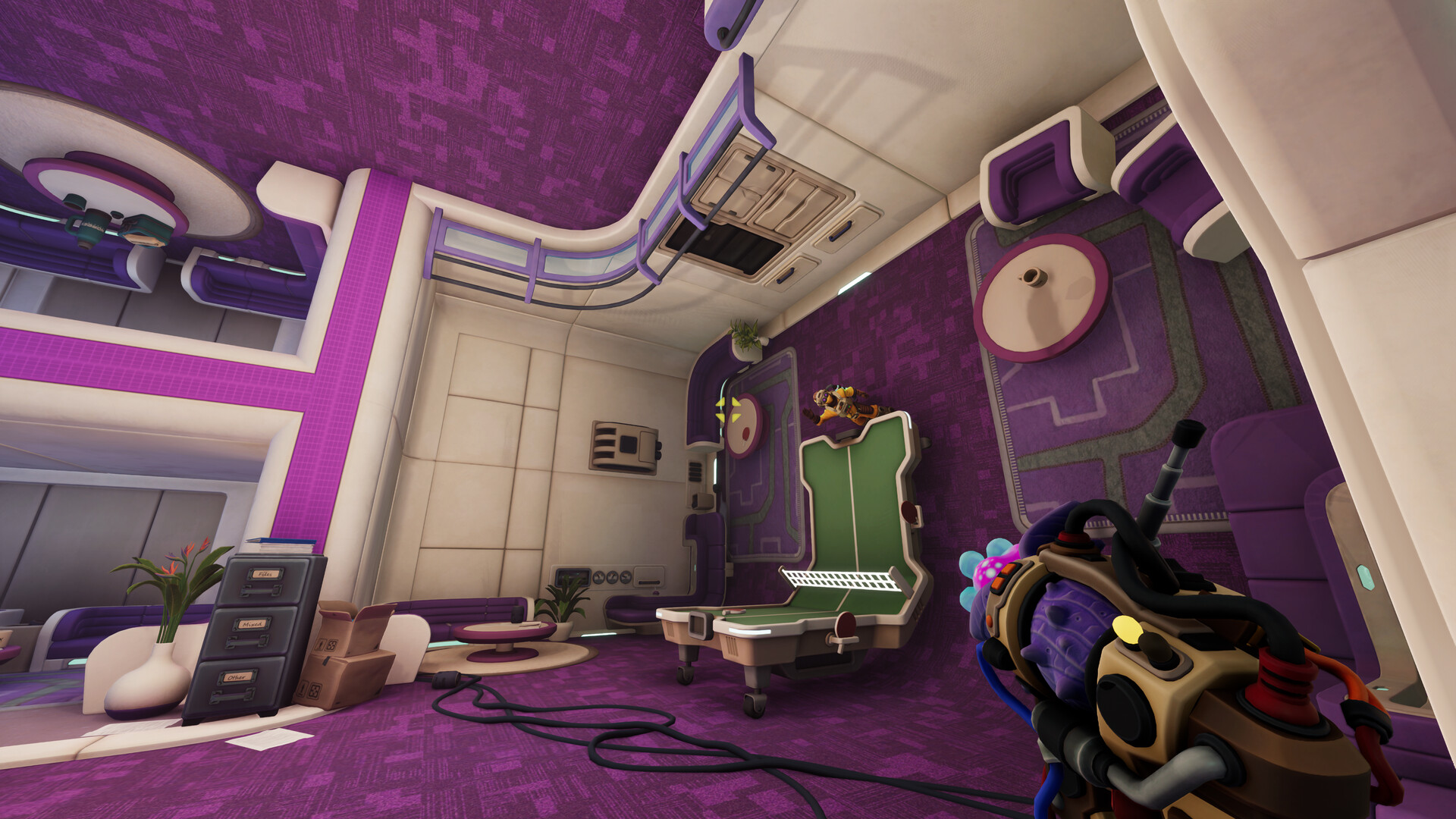
Official screenshot · Source: Steam store
The available Tomorrow-specific reference is a community-uploaded gameplay description, not a detailed transcript. It describes separated players, asymmetric puzzles, walkie-talkie communication, and a retro-futuristic facility. Those details establish the broad premise, but they do not verify individual puzzle mechanics, control bindings, checkpoint behavior, or achievement requirements.
The practical advice below therefore focuses on how to work through unfamiliar co-op puzzles together. Example symbols, panels, and instructions are hypothetical teaching examples, not confirmed objects from Tomorrow.
Know what the available sources actually establish
| Information | Evidence available | How to use it |
|---|---|---|
| Separated players and asymmetric puzzles | Tomorrow community video description | Prepare to exchange information your partner cannot see |
| Walkie-talkie communication | Tomorrow community video description | Check the communication controls before relying on them |
| Exact puzzle answers | Not supplied in the reference material | Derive answers from your current clues |
| Original game’s puzzle sequences | Older Steam community walkthrough | Treat them as information about the original game only |
| Tomorrow achievements and endings | Not established by these sources | Avoid assuming older requirements apply |
For background on the original title, consult the official We Were Here Steam store page. It is an authoritative reference for that game, not confirmation of Tomorrow’s features.
Before You Begin: Build a Reliable Communication Setup
The most useful preparation is agreeing on how you will describe things. You do not need elaborate terminology; you need terminology that means the same thing to both players.
Start with a short audio check using your chosen communication method. Have each person say a complete sentence, then ask the other to repeat its key detail. If a number, direction, or symbol description gets lost during this check, fix the audio before attempting a puzzle.
Check the actual in-game settings for microphone selection, input behavior, and interaction controls. This We Were Here Tomorrow tutorial does not assume a particular keyboard binding or that external voice chat behaves identically to the game’s radio system.
Agree on a shared vocabulary
| Topic | Useful convention | Why it helps |
|---|---|---|
| Left and right | “Left while facing the panel” | Establishes a clear reference point |
| Numbered positions | “Top row, second from the left” | Avoids ambiguous counting |
| Symbol descriptions | Shape, opening, then markings | Separates similar-looking icons |
| Instructions | One action per message | Makes errors easier to locate |
| Confirmation | Repeat the instruction before acting | Catches misunderstandings early |
| Completion | State the visible result | Confirms whether the action worked |
Avoid directions such as “put it over there” or “choose the weird one.” Those phrases depend on a shared view that you may not have.
Instead, say: “Choose the open circle with a short line extending downward.” Your partner can then ask whether the opening faces upward or sideways before making a choice.
Separate observations from guesses
Use two simple labels:
- Observation: “There are four positions on this panel.”
- Guess: “I think the four marks on your diagram correspond to those positions.”
This distinction prevents a plausible interpretation from becoming an unquestioned fact. If an attempt fails, you can revisit the guess without doubting everything you recorded.
Keep brief notes if that helps your group. A list of confirmed symbols and tested assumptions is usually more useful than a long description of every object in the room.
We Were Here Tomorrow Tutorial: A Repeatable Puzzle Method
When both players have different information, the challenge is often identifying which observations belong together. Use the following method whenever you encounter a new puzzle.
Step 1: Describe before interacting
Each player should give a short overview of the current area. Focus on:
- Readable text or instructions.
- Repeated symbols, colors, or numbers.
- Objects that appear interactive.
- Indicators that could show progress.
- Anything visibly changing over time.
Do not narrate every decorative detail. Begin with features that could carry a rule or connect to something your partner sees.
If the situation appears urgent, communicate the visible threat immediately. Do not assume you have unlimited time—or that a timer exists simply because an older game had one.
Step 2: Find a matching feature
Listen for overlap between your descriptions. Matching features might include the same number of positions, recurring shapes, or an identical label.
For example, suppose one player describes five selectable symbols and the other describes five entries beside a diagram. That is a reason to investigate a connection, not proof that the entries map directly.
Ask a distinguishing question: “Does your third entry contain the same split-circle shape I described?”
Step 3: Translate the clue into an exact instruction
A useful instruction specifies the target, action, and intended result.
| Weak instruction | Better instruction |
|---|---|
| “Use the triangle.” | “Select the triangle with a dot inside, in the bottom row.” |
| “Go right.” | “While facing the doorway, take the passage on your right.” |
| “Try the next one.” | “Change only the second position; leave the others unchanged.” |
| “It worked.” | “The indicator changed, but the exit is still closed.” |
These are communication examples, not confirmed Tomorrow puzzle solutions.
Step 4: Repeat, then act
Before a consequential input, have the acting player repeat it:
“Confirming: change the second position to the dotted triangle, leaving the first and third positions alone.”
That brief confirmation is especially useful when symbols resemble one another or when your partner has just corrected an earlier instruction.
Do not stack several unconfirmed actions into one message. If something goes wrong, you will struggle to identify where the misunderstanding began.
Step 5: Check the result together
After acting, both players should inspect their surroundings. A change may be visible only on the other side.
Report concrete feedback rather than conclusions:
- “The symbol is now illuminated.”
- “A new line of text appeared.”
- “Nothing changed on my side.”
- “The previous selection disappeared.”
The central habit in this We Were Here Tomorrow tutorial is simple: observe, match, instruct, confirm, and verify. Repeat that cycle instead of guessing faster.
Troubleshooting: What to Do When You Stop Making Progress
A stalled puzzle does not automatically mean you need the answer. First check whether you have an information problem, an interpretation problem, or an execution problem.
Use a quick diagnostic pass
| Symptom | Possible issue | Next action |
|---|---|---|
| Your descriptions never seem to match | You may be comparing unrelated objects | Restate each area’s labels and major features |
| The correct-looking choice fails | Orientation or symbol details may differ | Describe openings, marks, and reference points |
| You disagree about what happened | Feedback was not checked on both sides | Inspect both areas after one controlled action |
| An attempt changes several things | Too many inputs were made together | Test one change at a time, where possible |
| Instructions repeatedly get misheard | Audio or speaking overlap | Take turns and repeat key details |
| An old walkthrough looks unfamiliar | It may cover another game | Verify the exact title before following it |
These are troubleshooting possibilities, not confirmed explanations for a specific Tomorrow puzzle.
Recheck the clue after a failed attempt
Do not assume every clue remains unchanged. In player experience documented by the older Steam community walkthrough, the original game includes a book-and-platform section where an incorrect step replaces the book clue.
That report does not establish the same behavior in Tomorrow. It does illustrate a valuable habit: after a failure, compare the current clue with your notes before repeating the previous plan.
Look for changed ordering, different symbols, or newly available information. If nothing changed, say so explicitly.
Change one assumption at a time
Suppose you are unsure whether a sequence runs left to right or right to left. Test that interpretation without also changing the symbols and their starting positions.
Changing several variables at once makes a successful attempt difficult to explain and a failed attempt almost useless.
A short record can help:
- Known: Both sides show the same four symbols.
- Uncertain: Reading direction.
- Tested: Left-to-right interpretation.
- Result: No visible progress.
- Next check: Whether orientation is reversed.
This We Were Here Tomorrow tutorial recommends controlled testing over random input because every attempt should teach you something.
Reset the conversation before restarting the game
When frustration builds, stop issuing instructions briefly. Each player should state three things: what they know, what they assume, and what they still need.
That conversational reset can expose a missing detail without losing progress. Before restarting a session, check the game’s actual saving and checkpoint behavior; the supplied references do not verify it.
Avoid Mixing Tomorrow With the Original We Were Here
Search results can surface detailed guides that answer the wrong question. The supplied Steam walkthrough concerns We Were Here, originally published years before the Tomorrow gameplay description.
Its community-reported solutions include a colored-valve puzzle, a labyrinth lever order, a chess sequence, and theater staging. Those details should not be repackaged as Tomorrow instructions.
The same caution applies to achievements. The older guide discusses role-specific achievements and multiple playthroughs, but it does not establish Tomorrow’s completion requirements.
Check a guide before following its answer
Use this short verification checklist:
- Read the full game title. A shared franchise name is not enough.
- Match the visible environment. The room and relevant objects should correspond.
- Identify the player perspective. An asymmetric puzzle may require information from the other side.
- Check the starting state. A guide may begin after an earlier action.
- Separate demonstrated steps from commentary. A video description alone does not verify a solution.
The community-uploaded Tomorrow gameplay listing provides a broad description of the adventure, but the supplied text contains no room-by-room instructions. That limitation is why this We Were Here Tomorrow tutorial avoids invented codes, chapter names, and exact escape routes.
If you seek a spoiler, start with the smallest useful hint: which clue connects to which object. Escalate to a full solution only if you still need it.
FAQ
Does this We Were Here Tomorrow tutorial include every puzzle solution?
No. The available Tomorrow-specific material does not provide verifiable puzzle sequences. This guide offers a practical communication and troubleshooting method without presenting hypothetical examples as actual game content.
Can I use the original We Were Here walkthrough for Tomorrow?
Do not assume its answers apply. The original game’s community guide describes specific puzzles and achievements that are not verified for Tomorrow. Use it only when you are playing the title it actually covers.
What should we do first when we get stuck?
Stop entering inputs and compare observations. Confirm symbol details, orientation, and the current clue state. Then choose one uncertain assumption to test while leaving everything else unchanged where possible.
What is the most important co-op communication habit?
Repeat important instructions before acting, then report the visible result. That closes the loop between what one player intended, what the other player did, and what the game actually changed.
Related Guides
We Were Here Tomorrow demo walkthrough: Guide & Tips
Find the right We Were Here Tomorrow demo walkthrough, avoid wrong-game solutions, and use a practical checklist to work through co-op puzzles.
We Were Here Tomorrow full walkthrough: Part 1
Solve the wellness check, chemistry mixture, computer dials, and green keycard puzzles in this step-by-step We Were Here Tomorrow opening guide.
We Were Here Tomorrow guide: Co-op Tips and Tools
Start strong with this We Were Here Tomorrow guide to co-op communication, tools, puzzle-solving, playtime, and finding a partner.
We Were Here Tomorrow release date demo: Launch Guide
Get We Were Here Tomorrow's release date, limited-time demo details, Steam price, co-op requirements, and PC specs before teaming up.
We Were Here Tomorrow computer puzzle: Disk & Dial Guide
Solve the We Were Here Tomorrow computer puzzle with floppy disk setup, timed dial directions, co-op tips, and the next 3D printer steps.