We Were Here Tomorrow guide: Co-op Tips and Tools
Start strong with this We Were Here Tomorrow guide to co-op communication, tools, puzzle-solving, playtime, and finding a partner.
Your partner may have the clue you need—and no idea that you need it. This We Were Here Tomorrow guide helps you turn two incomplete perspectives into a shared solution, so your sessions involve less confused wandering and more satisfying breakthroughs. Use this We Were Here Tomorrow guide to prepare for your first session, understand the complementary tools, and build a reliable puzzle-solving routine without spoiling the discoveries.
Developed by Total Mayhem Games, this first-person, two-player puzzle adventure moves the series into a mysterious science-fiction facility beneath Antarctica. The advice below draws on the developer’s FAQ and published hands-on coverage; it is a spoiler-light beginner’s guide, not a verified room-by-room walkthrough.
We Were Here Tomorrow Guide: What to Know Before Playing
You and another Explorer awaken inside an unfamiliar research facility and work through assignments built around cooperation. Sometimes you explore together; often, separation means your partner cannot see the information in front of you.
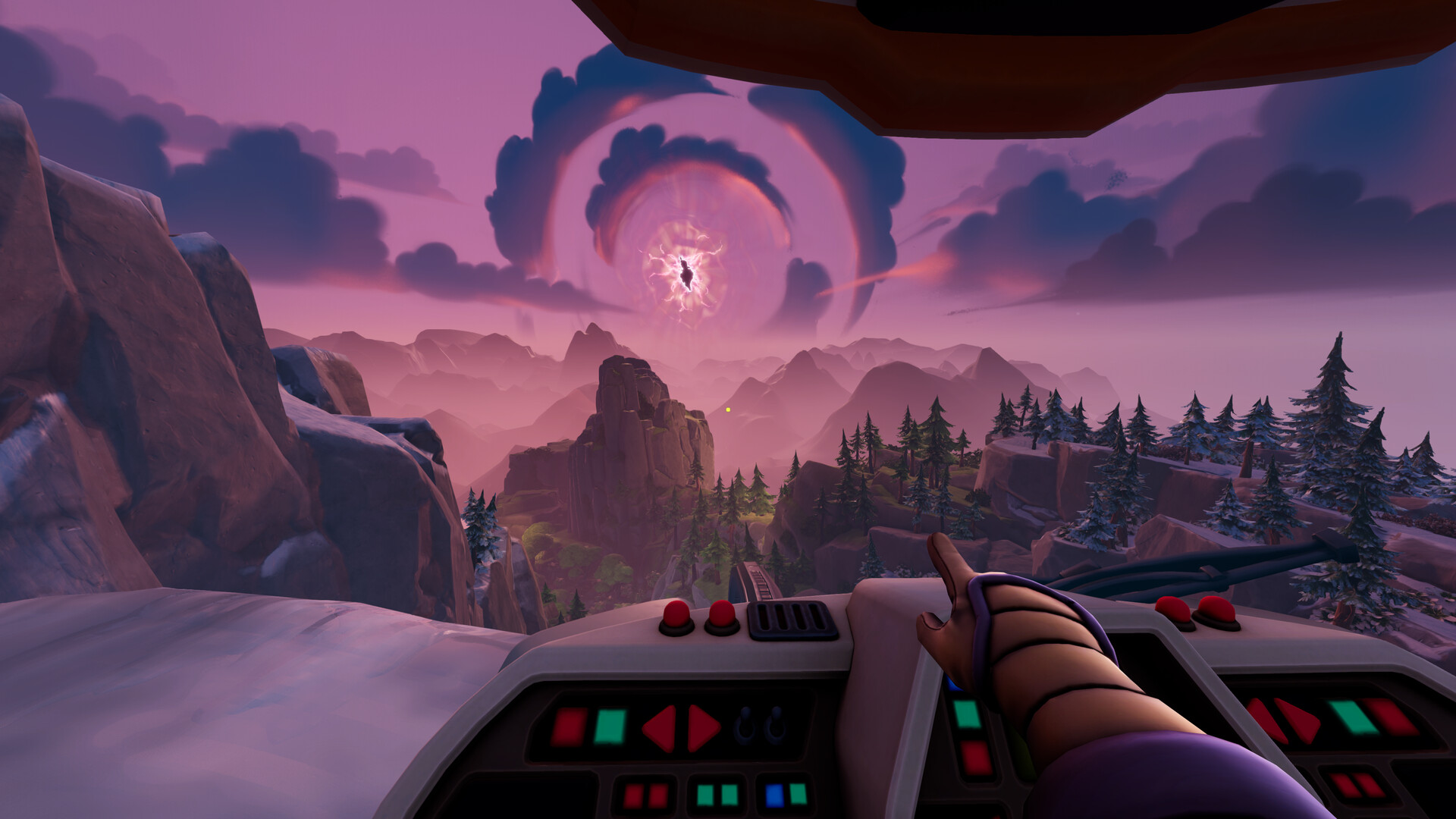
Official screenshot · Source: Steam store
That makes clear communication part of the puzzle, rather than something you do between puzzles. Being good at spotting patterns helps, but progress also depends on explaining those patterns to someone with a different view.
| Essential detail | What to expect |
|---|---|
| Core format | First-person, two-player cooperative puzzle adventure |
| Setting | A mysterious Antarctic facility with a retro-futuristic aesthetic |
| Puzzle design | Asymmetrical information, coordinated actions, and tool-based challenges |
| Estimated completion time | Roughly 10–15 hours, depending on the pair |
| Previous games required | None; this is a standalone entry with connections to earlier lore |
| Controller support | Supported, according to the developer FAQ |
| Listed standard price | $19.99 / €19.99 / £16.99, with a 10% launch discount announced |
The developer’s official We Were Here Tomorrow FAQ on Steam is the primary source for playtime, pricing, controller support, and partner-finding information. Check your storefront for current regional pricing and promotions.
Do you need to play the earlier games?
No. Tomorrow is the fifth mainline installment and sixth game overall, but the developer explicitly describes it as standalone. Returning players may recognize lore connections and Easter eggs; newcomers do not need that background to start solving puzzles.
Experience with games such as Portal may help you recognize spatial reasoning challenges. However, recognizing a puzzle’s general idea is not the same as solving it together. Both players still need to understand what their own actions contribute.
Plan for several sessions
The developer estimates approximately 10–15 hours, with substantial variation between pairs. Treat that as a planning range, not a performance target.
A useful approach is to schedule manageable sessions and take brief notes before stopping. Record your current objective, any established rules, and the next idea you wanted to test. That saves you from spending the next evening reconstructing your own reasoning.
Set Up Your Co-op Session Before Entering the Facility
The first practical step in this We Were Here Tomorrow guide is simple: agree on how you want to play before the first confusing room.
A pair looking for relaxed discovery will approach puzzles differently from players trying to finish quickly. Neither approach is wrong, but mismatched expectations can make normal trial and error frustrating.
Find a partner and agree on expectations
The developer recommends three ways to find another Explorer:
- Create a public lobby in the game.
- Look for a partner through the Steam forums.
- Use the developer’s Discord community.
When arranging a session, mention your language, time zone, availability, and spoiler preference. Saying “first playthrough, hints only after we both agree” gives a potential partner more useful information than simply asking who wants to play.
| Before you start | Recommended agreement | Why it helps |
|---|---|---|
| Spoilers | Decide when outside hints are acceptable | Protects the discovery experience |
| Communication | Test that both players can hear and understand each other | Prevents avoidable confusion |
| Availability | Agree on a session length | Makes a multi-session game easier to organize |
| Explanations | Describe observations before proposing solutions | Keeps assumptions from becoming “facts” |
| Experimenting | Announce changes before making them | Helps both players track cause and effect |
Avoid unverified purchase assumptions
The supplied developer FAQ leaves its cross-play question unanswered. Do not assume cross-platform compatibility when coordinating purchases; verify it through current official information first.
Likewise, community reports in the Steam discussion say that two copies are needed and that there is no friend pass. That is a player response, not a developer-confirmed answer in the supplied FAQ. Check the current store listing before buying on the assumption that one purchase covers both players.
These checks are especially important if you and your intended partner use different platforms.
Understand the Tools: Blocks, Platforms, and Hooks
Tomorrow adds complementary abilities that make movement between major puzzles more interactive. Published hands-on coverage describes one tool centered on creating goop blocks and platforms, alongside another that can pull objects, hook things together, and support traversal.
The important lesson is not which tool sounds stronger. The tools are designed to work together. A route that seems impossible from one player’s perspective may become practical once the other player changes the environment.
| Tool or ability | Reported capabilities | Useful question to ask |
|---|---|---|
| Goop block creation | Creates blocks that can be stacked | “Would a raised position change our options?” |
| Platform creation | Can create platforms, including on walls | “Is there a surface that could help us move onward?” |
| Hook-based interactions | Can pull objects and hook things together | “What movable or connectable elements have we overlooked?” |
| Combined traversal | Uses both players’ abilities to negotiate obstacles | “What does one player need the other to set up first?” |
These are capability summaries from preview coverage, not a promise that every object or surface accepts every interaction. Follow the game’s tutorial and feedback to learn the actual restrictions.
Think in sequences, not isolated actions
A useful habit in this We Were Here Tomorrow guide is to describe a proposed sequence before executing it.
For example, a hypothetical plan might be: “I’ll create a raised position, you’ll check whether it gives you access to an interaction, and then we’ll reassess the route.” This is a reasoning example, not a solution to a specific room.
That approach is more informative than repeatedly placing blocks while your partner experiments elsewhere. If the attempt fails, you can identify which part of the plan was wrong.
Treat traversal as a puzzle
Do not assume the space between obvious puzzle stations is merely a corridor. The creative director’s preview comments explain that the new abilities also support cooperative traversal challenges.
When the way forward is unclear, inspect the environment from both perspectives. Ask what each tool could change, and distinguish an inaccessible destination from a destination that requires preparation.
Communicate Clearly When You Cannot See the Same Things
The most reusable advice in this We Were Here Tomorrow guide is to describe what you observe before explaining what you think it means.
“There are three indicators, and the middle one is lit” gives your partner usable information. “I think you need to press the second button” skips the evidence and may send both players down the wrong path.
Establish shared reference points
Words such as “left,” “above,” and “behind” become unreliable when players face different directions. Preview coverage also shows unusual orientations, making a shared reference point particularly valuable.
Use a fixed landmark whenever possible: “left of the doorway when facing into the room,” rather than “over there on my left.”
| Communication problem | Better approach | Example phrasing |
|---|---|---|
| Different viewing directions | Anchor directions to a landmark | “Facing the entrance, it is on the right.” |
| Several similar objects | Give each one a stable label | “Let’s call them A, B, and C from the doorway.” |
| Unclear sequence | Number the steps aloud | “First I move this; then you check the result.” |
| Missed instruction | Ask for a read-back | “Tell me which object you’re about to change.” |
| Confusing feedback | Report the exact change | “One light switched off; the others stayed on.” |
These are general teamwork techniques, not descriptions of specific in-game solutions.
Separate observations, theories, and tests
Try organizing your discussion into three short statements:
- Observation: What can you directly see or confirm?
- Theory: What do you think that information means?
- Test: What single action could check the theory?
For instance: “This object moved when you interacted. I think your control affects my side. Try it once more while I watch.”
This structure leaves room for being wrong without losing track of what you actually know.
Give both players time to reason
The faster solver should explain the proposed logic rather than simply issue commands. Your partner may have information that disproves the plan—or may need to perform an action that only makes sense once the goal is clear.
Take turns leading explanations. Cooperation works better when both players understand the current objective, even if only one spotted the initial connection.
A Reliable Puzzle-Solving Routine When You Get Stuck
Use this We Were Here Tomorrow guide as a repeatable process rather than a list of guesses. When progress stops, return to the last confirmed fact and work outward.
Follow a five-step loop
| Step | What both players should do | Intended result |
|---|---|---|
| 1. Survey | Describe visible clues, controls, objects, and routes | Build a shared inventory |
| 2. Define | Agree on the immediate objective | Avoid solving different problems |
| 3. Connect | Compare clues with available interactions | Form a testable explanation |
| 4. Test | Change one relevant thing and announce it | Identify cause and effect |
| 5. Review | Compare the outcome with your prediction | Keep, revise, or reject the theory |
Changing one thing at a time is especially useful when several controls or movable elements are involved. If both players alter the setup simultaneously, a promising result may be difficult to reproduce.
Apply that routine to beam puzzles
Hands-on coverage describes a puzzle involving repositioning pylons to direct a beam through targets. It does not supply an exact solution.
A sensible general approach is to identify the source, inspect the apparent destination or targets, and trace the visible path. Then adjust one relevant element while your partner reports what changed.
Do not assume speed is the missing ingredient. The creative director characterized the previewed example as emphasizing reasoning through a chain of events rather than primarily relying on timing.
Reset your thinking before blaming the game
If repeated attempts produce no progress:
- Restate the objective without mentioning your current solution.
- Ask each player to describe anything they have not yet shared.
- Recheck the reference points behind directional instructions.
- Review what your tools can do in that environment.
- Take a short break if you are repeating the same unsuccessful test.
This does not mean technical problems are impossible. It means checking communication and assumptions first can prevent you from mistaking a misunderstood puzzle for a bug.
FAQ: We Were Here Tomorrow Guide
How long does We Were Here Tomorrow take to beat?
The developer estimates roughly 10–15 hours, depending on the pair. Puzzle familiarity, communication, exploration, and time spent testing ideas will affect your completion time. Plan for multiple sessions rather than one evening.
Can you play We Were Here Tomorrow alone?
It is designed as a two-player cooperative adventure, with asymmetrical puzzles that require cooperation. If you need a partner, the developer recommends public in-game lobbies, Steam forums, or its Discord community.
Is We Were Here Tomorrow a horror game?
The developer does not classify the series as horror. Creepy environments, traps, and unsettling elements can appear, but the main focus is cooperative puzzle-solving rather than sustained scares.
Does this We Were Here Tomorrow guide include every puzzle solution?
No. This is a spoiler-light beginner’s guide based on the developer FAQ and published preview information. It covers preparation, tool concepts, communication, and problem-solving habits—not verified chapter solutions. Start by sharing observations, testing one idea at a time, and making sure both Explorers understand the plan.
Related Guides
We Were Here Tomorrow demo walkthrough: Guide & Tips
Find the right We Were Here Tomorrow demo walkthrough, avoid wrong-game solutions, and use a practical checklist to work through co-op puzzles.
We Were Here Tomorrow full walkthrough: Part 1
Solve the wellness check, chemistry mixture, computer dials, and green keycard puzzles in this step-by-step We Were Here Tomorrow opening guide.
We Were Here Tomorrow puzzle guide: Early Solutions
Solve the opening wellness check, R&D circuits, chemical recipe, timed dials, and green access pass puzzles with clear co-op instructions.
We Were Here Tomorrow release date demo: Launch Guide
Get We Were Here Tomorrow's release date, limited-time demo details, Steam price, co-op requirements, and PC specs before teaming up.
We Were Here Tomorrow cable puzzle: Co-op Tips
Stuck on the We Were Here Tomorrow cable puzzle? Use clear callouts, connection notes, and controlled tests while avoiding unverified solutions.