We Were Here Tomorrow review: Bold but Buggy
Our We Were Here Tomorrow review weighs inventive co-op puzzles, sci-fi visuals, motion sickness concerns, and reported bugs before you buy.
A brilliant cooperative puzzle can make you feel completely in sync with a friend—until a broken radio leaves you talking to nobody. This We Were Here Tomorrow review examines whether Total Mayhem Games’ science-fiction reinvention delivers enough teamwork and discovery to outweigh its reported technical problems. If you’re planning your next two-player adventure, this We Were Here Tomorrow review separates promising design changes from the issues that could derail your evening.
Editorial note: This is a source-based assessment, not a firsthand playthrough. It draws on published PC and PS5 coverage and community reports available as of October 21, 2026. Patch status has not been independently verified.
We Were Here Tomorrow Review: The Quick Verdict
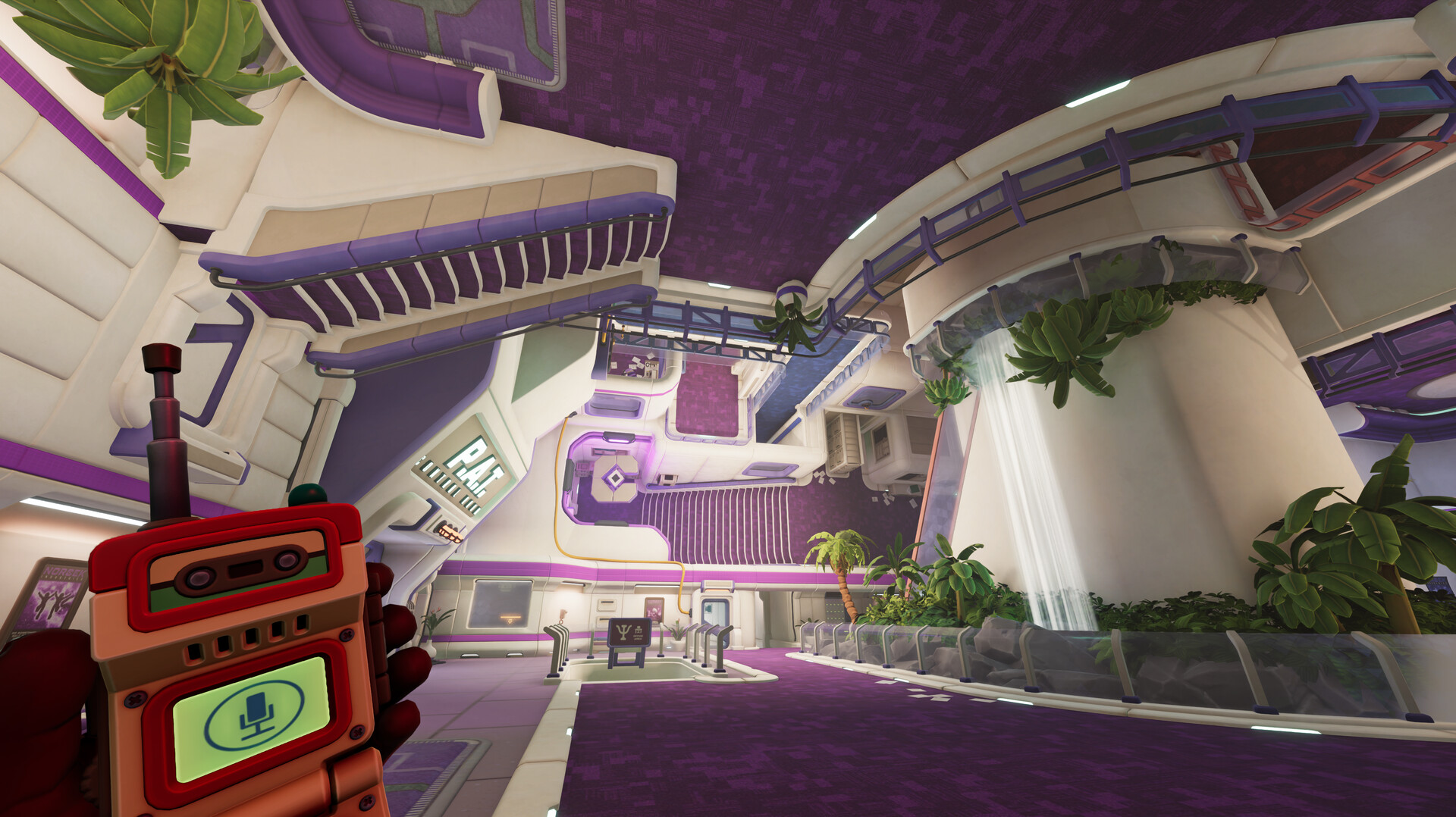
Official screenshot · Source: Steam store
We Were Here Tomorrow looks like an imaginative evolution of the series, but the available evidence supports a cautious buying recommendation. Its colorful research facility, perspective-changing experiments, and increased time alongside your partner offer compelling reasons to investigate. Communication failures, uneven puzzle clarity, and repeated motion sickness reports are harder to overlook.
The distinction matters because these problems affect the central attraction: working through a challenge together. An unreliable microphone is more disruptive here than in a game where voice chat is optional background conversation.
| Area | What the available evidence suggests | Buying takeaway |
|---|---|---|
| Cooperative design | More shared spaces alongside asymmetric challenges | Appealing if you want closer collaboration |
| Setting and presentation | Colorful retro-futuristic labs replace familiar castle environments | A substantial visual change |
| Puzzle quality | Inventive mechanics, but sharply divided reactions to difficulty and clues | Expect an uneven experience |
| Technical reliability | Voice, interaction, connection, and collision issues reported | Check recent feedback before buying |
| Comfort | Gravity-changing traversal has caused nausea and headaches for some players | A significant consideration for sensitive players |
Published opinions illustrate the divide. I Dream of Indie Games awarded its positive Silver Genie Lamp distinction, although its reviewer had not finished the adventure. LifeisXbox completed the game on PS5 and awarded 50/100, citing substantial frustration with bugs, pacing, and particular puzzles.
Neither assessment tells the whole story. Together, they suggest an ambitious game whose appeal depends heavily on your tolerance for friction.
A Sci-Fi Setting That Changes More Than the Scenery
The premise moves two explorers from a snowy expedition into an unfamiliar research facility after an extended period frozen in ice. There, a scientist directs them through efforts to restore operations, with unstable experiments and a space-time rift providing the foundation for the adventure.
It is a useful departure. A laboratory can justify shrinking machines, gravity manipulation, and unusual tools without making every challenge feel disconnected from its surroundings.
For this We Were Here Tomorrow review, the strongest argument in favor of the new setting is mechanical: science fiction gives the developers more ways to change how two players perceive and navigate the same space.
Less isolation, more shared discovery
Earlier entries leaned heavily on separation: one person saw information the other needed. Tomorrow retains asymmetric cooperation, but both published reviews describe noticeably more time spent together.
That changes the rhythm. Shared rooms allow partners to inspect mechanisms, experiment with equipment, and enjoy physical comedy between puzzles. Separation still creates information gaps, but isolation is no longer the dominant mood throughout.
| Design element | Earlier-series emphasis | Tomorrow’s reported approach |
|---|---|---|
| Atmosphere | Eerie castles and mysterious spaces | Brighter laboratories and experimental machinery |
| Player positioning | Frequent separation | More time together, mixed with separate tasks |
| Communication | Describing unseen clues over radios | Describing clues plus coordinating shared interactions |
| Story delivery | Mystery and indirect discoveries | More frequent guidance from a speaking character |
| Puzzle framing | Environmental riddles and symbolic information | Scientific systems, scale changes, and energy manipulation |
This shift will not please every returning fan. Some community reports miss the darker atmosphere and distinctive puzzle scenarios of We Were Here Forever. Others welcome the new environments and describe them as a highlight.
The narrator is similarly divisive. I Dream of Indie Games praised the performance and humor, while LifeisXbox and some players found the character less effective. One practical criticism is especially relevant: the video reviewer reported that story dialogue could interrupt the radio channel used to communicate with a partner.
Inventive Co-Op Puzzles Meet Uneven Clue Design
The most encouraging material in this We Were Here Tomorrow review concerns puzzles that genuinely exploit two different perspectives.
One example involves shrinking a player so they can explore spaces their full-sized partner cannot access in the same way. The in-game voice effect also raises the smaller character’s pitch, turning a mechanical distinction into a shared joke.
Other challenges involve directing lasers, routing electricity, moving environmental structures, and manipulating gravity. These ideas give partners something more interesting to discuss than which switch to press next.
Difficulty is not the same as clarity
The concern is not simply that some puzzles are hard. It is that reviewers disagree about whether the information needed to solve them is communicated effectively.
I Dream of Indie Games described occasional overlooked details followed by satisfying breakthroughs. LifeisXbox reported spending more than two hours on a laser puzzle and roughly four hours struggling with a generator challenge before obtaining help through the PR contact.
Those are individual experiences, not universal completion benchmarks. However, community reports also mention unclear clues, including wording associated with the laser puzzle. That overlap makes readability a legitimate concern rather than merely a disagreement about difficulty.
The opposite complaint appears too: some players find many challenges overly straightforward. The resulting picture is less “consistently demanding puzzle game” and more “uneven difficulty curve with occasional major bottlenecks.”
Practical ways to avoid unnecessary frustration
| Situation | Useful next step | Why it may help |
|---|---|---|
| A mechanism’s purpose is unclear | Inspect nearby screens, posters, and whiteboards | Important instructions can appear among background details |
| Both players describe the room differently | Agree on fixed labels for objects and locations | Shared terminology reduces misunderstandings |
| Repeated attempts produce the same failure | Explain the assumed rule before trying again | A mistaken premise can waste more time than execution |
| An object stops responding | Check whether the partner can still interact normally | This helps distinguish a puzzle problem from a possible bug |
| Progress has stalled | Take a short break, then restate the evidence | A fresh interpretation may reveal a missed detail |
The screen advice has a specific basis: the video review notes that only some computer displays are interactive, and certain displays contain useful puzzle information. Do not assume every monitor is decorative—or that every readable screen contains a solution.
Bugs, Performance, and Motion Sickness
The biggest reservation in this We Were Here Tomorrow review is technical reliability. Multiple community reports describe voice chat cutting out, radios becoming unavailable, or interactions failing. LifeisXbox reported nonfunctional in-game communication on PS5, along with disconnections, intermittent audio, and collision problems.
These accounts do not establish that every player will encounter the same issues. One positive Steam player experience specifically praised voice communication and performance, while still acknowledging an elevator-related soft lock and an inventory oddity.
The appropriate conclusion is variable reliability, not a guarantee of failure or a clean bill of health.
| Reported concern | Source of the observation | Practical implication |
|---|---|---|
| Voice chat or walkie-talkie failures | Community reports and PS5 review | A backup communication method may be necessary |
| Intermittent music and dialogue | PS5 review | Story delivery and atmosphere can suffer |
| Interaction and inventory problems | Community reports | Progress may become confusing or disrupted |
| Collision-related sticking | PS5 review | Restarting may be required in affected situations |
| Frame-rate drops in detailed areas | PC video review | Performance may vary with hardware and settings |
| Gravity-related discomfort | Video review and community reports | Some players may need breaks or may find sections unsuitable |
Why external voice chat is only a partial workaround
Several players and the PS5 reviewer used Discord when in-game communication failed. That can preserve conversation, but it does not reproduce proximity effects, radio presentation, or playful voice filters.
It also cannot repair an unresponsive object or a broken session. Treat external chat as a fallback, not proof that technical concerns are inconsequential.
Before committing to a long session, test both microphones and confirm that each player can hear the other. If problems appear, keep restart-related progress loss in mind rather than assuming a relaunch is harmless.
Gravity manipulation deserves a clear warning
The gravity sections are visually distinctive: players walk along walls and ceilings as their viewpoint changes orientation. They are also the most consistent comfort concern across the supplied material.
The video reviewer reported discomfort despite not usually experiencing motion sickness. Several community reports mention nausea or headaches, including accounts from players who otherwise recommend the game.
If rotating viewpoints bother you, this should influence your purchase decision. Take breaks at the first signs of discomfort rather than pushing through. The references do not establish whether a dedicated setting meaningfully reduces these effects.
Length, Value, and Whether You Should Buy Now
For readers using this We Were Here Tomorrow review to plan a weekend, completion time needs qualification.
LifeisXbox lists approximately 12 hours for the story and 20 hours for full completion, while reporting 20 hours played before publication. The video reviewer had passed eight hours with a substantial portion apparently remaining.
These figures are useful planning references, not a reliable average. Puzzle-solving speed, technical interruptions, and the amount of help you seek can all change the total.
The best value question is therefore not just “How long is it?” but “Will both partners enjoy the time required?”
Consider buying if you:
- Want a substantial two-player puzzle adventure with a brighter science-fiction identity.
- Enjoy experiments involving scale, spatial orientation, and coordinated machinery.
- Prefer more shared exploration than earlier entries typically offered.
- Can tolerate troubleshooting if technical problems occur.
Consider waiting if you:
- Need dependable in-game voice communication.
- Have a low tolerance for obscure clues or disrupted progress.
- Are sensitive to camera rotation and gravity-changing traversal.
- Primarily want the darker atmosphere of the older games.
For current player experiences, consult the Steam community reviews for We Were Here Tomorrow, paying particular attention to review dates and recent updates. The October 20–21 sample discussed here is not a substitute for current patch information.
Final verdict: Tomorrow’s imaginative cooperative mechanics and vivid setting make it worth watching. Based on the available launch-period evidence, however, waiting for clearer signs of technical stability is the safer recommendation for anyone seeking a smooth, low-friction co-op experience.
FAQ
Is We Were Here Tomorrow worth buying?
This We Were Here Tomorrow review recommends a cautious approach. Its cooperative experiments and sci-fi environments sound appealing, but reported communication failures and uneven puzzle clarity make checking recent player experiences important before purchasing.
How long does We Were Here Tomorrow take to beat?
LifeisXbox estimates about 12 hours for the story and 20 hours for full completion. These are one outlet’s figures, not a confirmed average. Difficult puzzles and technical interruptions can substantially affect your playtime.
Does We Were Here Tomorrow cause motion sickness?
It can for some players. Both published coverage and community reports describe discomfort during gravity-changing sequences. These sections involve walking on walls and ceilings with changing viewpoints, so players sensitive to visual rotation should take the concern seriously.
Is We Were Here Tomorrow better than We Were Here Forever?
There is no clear consensus in the supplied coverage. Tomorrow offers a new setting, more shared spaces, and experimental mechanics. Some community reports prefer Forever’s atmosphere and puzzle variety, while others enthusiastically praise Tomorrow’s visuals and cooperative design.
Related Guides
We Were Here Tomorrow metacritic: Scores Explained
Check We Were Here Tomorrow's Metacritic status, release details, and review availability, plus why the original game's score doesn't apply.
We Were Here Tomorrow reddit: Reviews & Buying Tips
Searching We Were Here Tomorrow reddit? Compare early Steam ratings, co-op features, pricing, and preview impressions before buying.
We Were Here Tomorrow announcement: Release Details
Explore the We Were Here Tomorrow announcement, October 20 release, crossplay plans, co-op puzzles, Steam pricing, and PC requirements.
We Were Here Tomorrow demo walkthrough: Guide & Tips
Find the right We Were Here Tomorrow demo walkthrough, avoid wrong-game solutions, and use a practical checklist to work through co-op puzzles.
We Were Here Tomorrow cable puzzle: Co-op Tips
Stuck on the We Were Here Tomorrow cable puzzle? Use clear callouts, connection notes, and controlled tests while avoiding unverified solutions.