We Were Here Tomorrow floppy disk puzzle: Co-op Tips
Stuck on the We Were Here Tomorrow floppy disk puzzle? Learn what is verified and use a practical co-op checklist to organize clues and test ideas.
Stuck at the Floppy Disk Puzzle? Start Here
One overlooked clue can leave both players staring at the same problem without making progress. If you’re searching for the We Were Here Tomorrow floppy disk puzzle, separating confirmed information from guesswork can save you from following an invented solution. This We Were Here Tomorrow floppy disk puzzle guide explains the limits of the available evidence, then gives you a practical way to compare clues and test ideas with your partner.
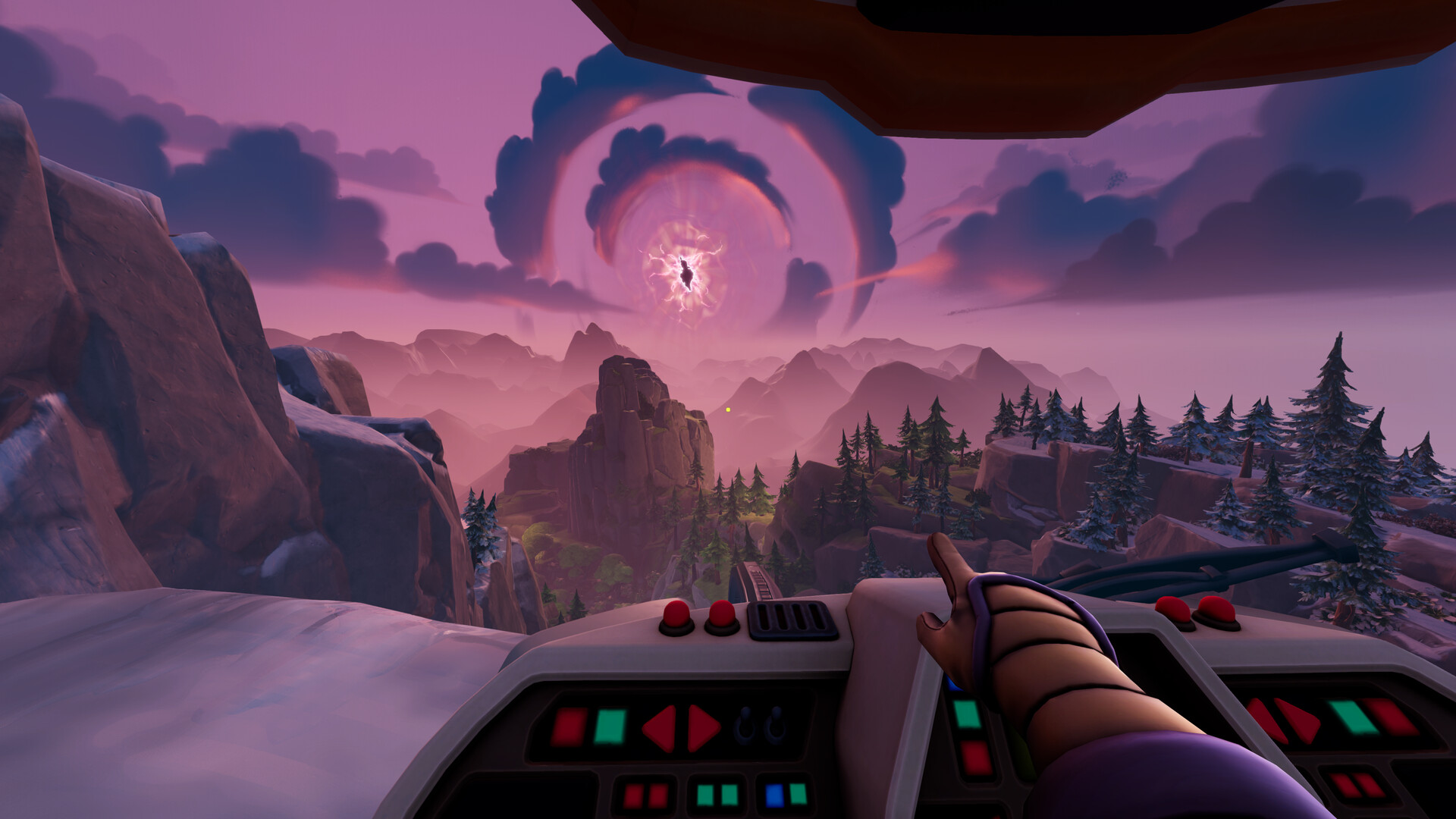
Official screenshot · Source: Steam store
There is no verified floppy disk solution in the reference material available for this article. Neither the official game description nor the supplied hands-on preview identifies this puzzle’s disk locations, input sequence, terminal commands, or completion conditions.
That means this is a troubleshooting guide, not a confirmed walkthrough. The suggestions below are general puzzle-solving techniques to apply only where they match what appears on your screens.
What Is Actually Confirmed About the Puzzle?
Before changing anything, establish what you know. A search phrase can describe the object players remember rather than an official puzzle name. Without footage or a room-specific walkthrough, “floppy disk puzzle” does not establish how the encounter works.
The official We Were Here Tomorrow game page confirms an asymmetric cooperative adventure set inside a Norček Industries facility. Each partner has a walkie-talkie and a distinct tool, making communication and cooperation central to progress.
The supplied GameRant preview also describes separated players exchanging information, increasingly complex puzzles, and abilities that work together. However, its examples involve beam redirection and traversal—not a documented floppy disk sequence.
| Topic | What the supplied sources establish | What remains unverified |
|---|---|---|
| Cooperative structure | Two players must communicate and cooperate | The exact roles in a disk-related encounter |
| Player equipment | Walkie-talkies and different tools | Whether either tool is needed here |
| Puzzle design | Challenges involve shared reasoning | Any disk order, password, or matching rule |
| Setting | A retro-futuristic research facility | The room or chapter containing this puzzle |
| Solution details | No disk-specific solution is provided | Locations, inputs, feedback, and completion trigger |
For the We Were Here Tomorrow floppy disk puzzle, that distinction matters. A confident-looking sequence is not useful unless it corresponds to the objects, labels, and rules in your session.
Avoid borrowing answers from unrelated puzzles
Do not assume that a code from another We Were Here game applies here. Similarly, the preview’s discussion of energy beams does not establish anything about disk mechanics.
Before trusting a walkthrough, compare its room layout, visible objective, and interactable objects with your own. A mismatch is a reason to stop—not a reason to force the instructions to fit.
Build a Shared Clue Inventory Before Testing
The best first step is to make sure both players are describing the same problem. In an asymmetric co-op game, your partner may have information you cannot see. You can both be making reasonable deductions while working from incomplete evidence.
For the We Were Here Tomorrow floppy disk puzzle, begin with a short information exchange rather than a series of guesses.
1. Describe each side without interpreting it
Take turns describing your surroundings. Start with literal observations:
- Exact wording on screens, signs, and labels.
- Objects that display an interaction prompt.
- Symbols, colors, numbers, or diagrams.
- Controls that appear usable.
- Any objective or instruction currently displayed.
Say “three objects on the desk” before saying “three keys.” The first is an observation; the second assumes a function.
If you see disks, transcribe their labels exactly. If you do not see disks yourself, ask your partner what led them to identify the encounter that way.
2. Agree on consistent names
Invented shorthand is useful when both players understand it. “Left disk,” however, becomes confusing when someone turns around.
Use printed labels when available. Otherwise, agree on a fixed reference point such as “nearest the entrance” or assign temporary names in your notes.
| Information to record | How to record it | Why it helps |
|---|---|---|
| Printed wording | Copy the full text | Prevents paraphrasing from hiding a distinction |
| Symbols | Describe shape and orientation | Avoids confusing similar markings |
| Position | Use a fixed landmark | Keeps “left” and “right” consistent |
| Interaction | Note the displayed prompt | Separates usable objects from decoration |
| Result | Record the exact visible change | Makes later comparisons possible |
3. Have your partner read the details back
A quick read-back catches mistakes before they become theories. If one player says a label contains a zero and the other records the letter O, every later attempt may rest on the wrong information.
This step is especially valuable for small text, unfamiliar symbols, and anything viewed from an awkward angle.
Test the Floppy Disk Puzzle Without Losing Track
Once you have a shared inventory, look for explicit rules before testing combinations. The We Were Here Tomorrow floppy disk puzzle may tempt you to start inserting or arranging objects immediately, but those actions are only informative if you understand what changed.
The following process is a general troubleshooting method, not a verified sequence for this encounter.
| Step | Action | What to look for |
|---|---|---|
| 1. Establish a baseline | Describe the current state on both sides | Existing messages, positions, and active controls |
| 2. Form one hypothesis | Explain the clue supporting your idea | A connection grounded in visible evidence |
| 3. Make one change | Perform a single deliberate interaction | A result you can attribute to that action |
| 4. Compare both views | Ask your partner what changed | Feedback visible only on their side |
| 5. Record the result | Note the action and exact response | Evidence for keeping or rejecting the theory |
| 6. Reassess | Compare the result with your prediction | Whether the proposed rule still makes sense |
Separate object selection from ordering
If your room contains several disks or other selectable objects, there may be more than one question to answer:
- Which objects matter?
- Where do they belong?
- Does their order matter?
- Is another action required afterward?
These are possibilities to investigate, not confirmed mechanics. Avoid deciding that you have an “order problem” before finding evidence that order matters at all.
For example, if two objects have different labels, compare those labels with any instructions your partner can see. Do not assume their colors determine placement simply because color is easy to describe.
Change one variable at a time
Suppose you move an object, press a control, and ask your partner to activate something simultaneously. If the room responds, you may not know which action caused it.
Instead, announce a single test and wait for both players to report. This makes failed attempts useful: they can eliminate an explanation rather than merely add confusion.
If an interaction appears irreversible, pause before testing. Read any available instructions and agree on the action together.
Distinguish silence from failure
“No change on my screen” does not necessarily mean “nothing happened.” Ask your partner to check their side before repeating an action.
Conversely, do not treat an unexplained sound or animation as proof of success. Look for a clear state change, new instruction, or newly available interaction.
Troubleshooting When Your Attempts Stop Helping
When progress stalls, more guessing often produces less information. Return to the last state you can describe confidently and check whether the problem is a missing clue, a misunderstood rule, or inconsistent communication.
Use this checklist for the We Were Here Tomorrow floppy disk puzzle only where the symptoms match your session.
| Symptom | Possible explanation—not a diagnosis | Useful next check |
|---|---|---|
| You keep repeating attempts | Earlier results were not recorded | Write down completed tests before continuing |
| Your descriptions conflict | You are using different reference points | Agree on fixed names and landmarks |
| An object seems unusable | Its function or required state is unclear | Check its prompt and nearby instructions |
| Only one player sees feedback | Relevant information may be split | Report both views after each interaction |
| A theory fits some clues but not others | The assumed rule may be incomplete | Identify the evidence it fails to explain |
| Everything appears correct | You may have overlooked an instruction | Revisit displayed objectives and available controls |
Reset your explanation before resetting the game
Have each player explain the proposed solution from the beginning. Ask:
- What are we trying to accomplish?
- Which clue tells us the rule?
- What have we actually tested?
- What observation would prove our idea wrong?
If you cannot answer the second question, your solution may be based on an assumption.
Restarting or reloading should not be the first response to an unexplained result. The supplied sources do not establish a disk-related bug, so there is no basis here for calling a failed attempt a technical fault.
Capture useful evidence if you need more help
For a room-specific answer, screenshots from both players’ perspectives are more useful than “the disks don’t work.”
Capture readable labels, the current objective, available controls, and any response after an attempted interaction. Include what you changed and what each player observed.
A concise record might say: “We changed one object, activated the nearby control, and saw no new message on either side.” That gives another solver something concrete to investigate without assuming an undocumented mechanic.
FAQ
What is the exact We Were Here Tomorrow floppy disk puzzle solution?
The supplied sources do not provide an exact solution. They contain no verified disk sequence, password, terminal command, or room-specific walkthrough. Any precise answer offered from this material alone would be speculation.
Does this puzzle require both players?
The game is built around two-player asymmetric cooperation, but the supplied references do not describe this encounter’s individual roles. Compare information from both perspectives rather than assuming one player has every clue or control needed.
Should I sort floppy disks by color, number, or label?
Only if an in-game clue supports that rule. The available material does not verify any sorting method. Record all visible identifying details, then look for an explicit connection to instructions, diagrams, or information on your partner’s side.
What should we do if we are still stuck?
Stop repeating undocumented guesses. Build a shared clue inventory, verify exact wording, and record one controlled test at a time. If that does not reveal the rule, gather screenshots from both perspectives and seek a walkthrough that demonstrably matches your room. The most useful next step is better evidence—not a more confident guess.
Related Guides
We Were Here Tomorrow cable puzzle: Co-op Tips
Stuck on the We Were Here Tomorrow cable puzzle? Use clear callouts, connection notes, and controlled tests while avoiding unverified solutions.
We Were Here Tomorrow chemical puzzle: Co-op Help
Stuck on the We Were Here Tomorrow chemical puzzle? Get practical co-op troubleshooting tips and learn which solution details remain unverified.
We Were Here Tomorrow computer puzzle: Disk & Dial Guide
Solve the We Were Here Tomorrow computer puzzle with floppy disk setup, timed dial directions, co-op tips, and the next 3D printer steps.
We Were Here Tomorrow announcement: Release Details
Explore the We Were Here Tomorrow announcement, October 20 release, crossplay plans, co-op puzzles, Steam pricing, and PC requirements.
We Were Here Tomorrow demo walkthrough: Guide & Tips
Find the right We Were Here Tomorrow demo walkthrough, avoid wrong-game solutions, and use a practical checklist to work through co-op puzzles.