We Were Here Tomorrow how long to beat: Playtime Guide
Find the latest We Were Here Tomorrow completion-time status, what affects playtime, and how to plan your two-player puzzle sessions.
How Long Does We Were Here Tomorrow Take to Beat?
Planning a co-op night around We Were Here Tomorrow how long to beat searches comes with a catch: there is no reliable completion-time average in the available launch data. That matters when you and your partner are trying to decide whether to reserve one evening or several sessions. The honest We Were Here Tomorrow how long to beat answer, as of October 21, 2026, is not yet established, rather than a verified number of hours.
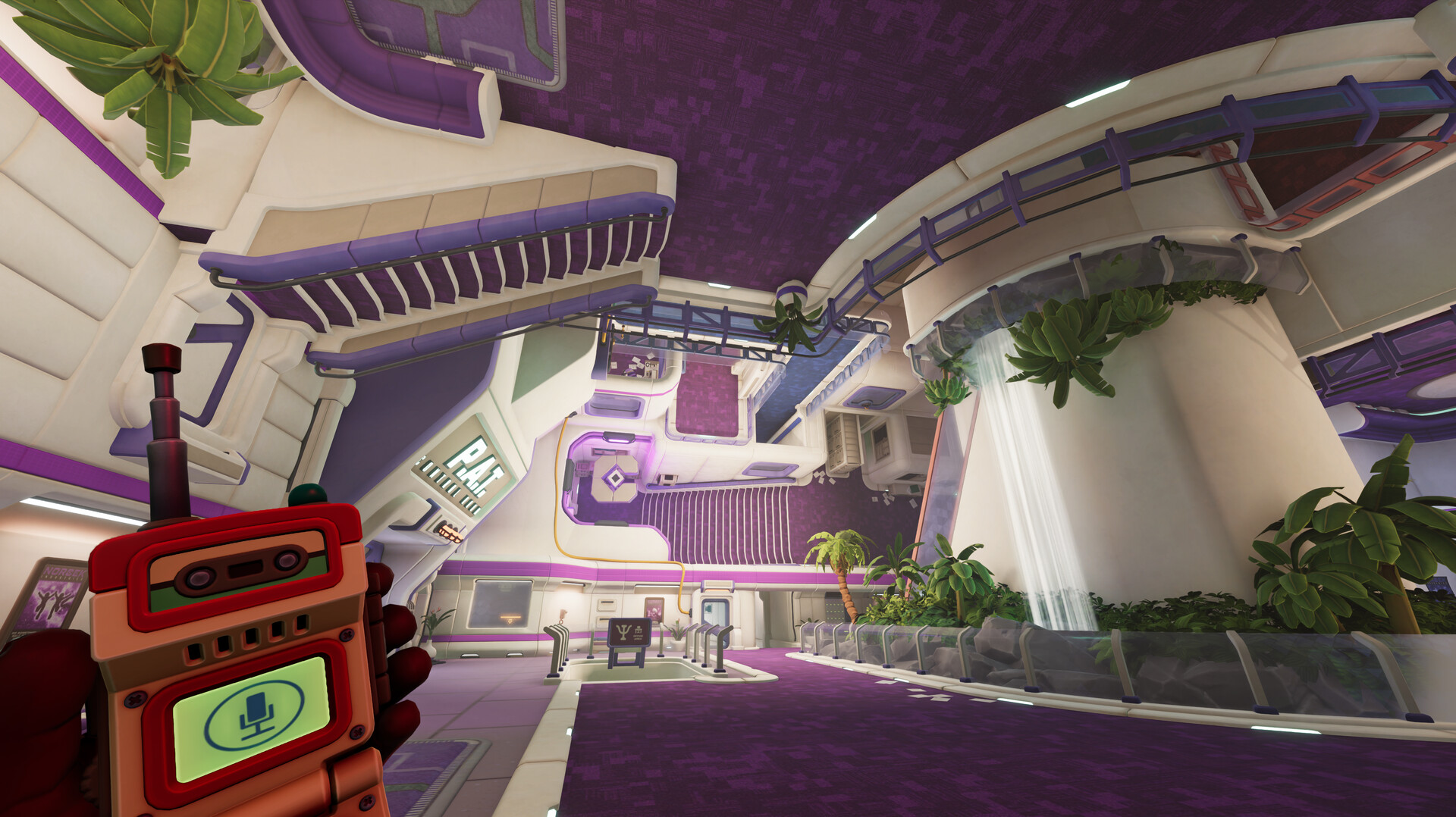
Official screenshot · Source: Steam store
The game launched on October 20, 2026. In the supplied launch-period snapshot, HowLongToBeat shows zero recorded completions and explicitly indicates that it lacks sufficient timing data. The official Steam description also does not give a campaign-length estimate.
That leaves an important distinction: the game has a full co-op adventure to finish, but the available sources do not establish how long a typical pair needs to finish it.
| Playthrough goal | Verified duration as of October 21, 2026 | What you can safely conclude |
|---|---|---|
| First story completion | Not established | No dependable launch-period average is available |
| Story plus additional exploration | Not established | Exploration may change your pace, but the extra time is unmeasured |
| All achievements | Not established | Steam lists 37 achievements, not a completion-time estimate |
| Replay from the other role | Not established | The two roles offer different perspectives, but replay length is unverified |
Bottom line: do not treat a specific hour count as confirmed unless it comes with identifiable completion evidence. For now, plan flexible co-op sessions rather than relying on a promised one-night finish.
What the missing data actually means
An empty completion-time field does not mean the game is unusually short, exceptionally long, or impossible to finish. It means the available tracker has not collected enough usable submissions.
Likewise, the existence of Steam reviews does not establish campaign length. Someone can review a game before reaching the ending, and total account playtime can include breaks, retries, or time spent in menus.
For a useful We Were Here Tomorrow how long to beat estimate, completed playthroughs matter more than review counts or the number of people currently playing.
What the Available Sources Confirm
The strongest available information concerns the game's structure, not its duration. Total Mayhem Games describes an online, two-player puzzle adventure built around communication, separate perspectives, and distinct equipment.
According to the official We Were Here Tomorrow Steam listing, you and your partner explore a mysterious Norček Industries facility. You are often separated, and you must describe your surroundings and combine information to solve puzzles.
That design helps explain why one universal completion time may eventually be less useful than a range.
| Confirmed detail | Source | Why it matters for planning |
|---|---|---|
| Released October 20, 2026 | Steam listing | The available timing snapshot comes from immediately after launch |
| Co-op only, with two distinct roles | Steam listing | You need a partner, and your perspectives differ |
| Walkie-talkie communication is central | Steam listing | Clear descriptions are part of solving the puzzles |
| 37 Steam achievements | Steam listing | Finishing the story and earning every achievement are different goals |
| Zero recorded completions in the snapshot | HowLongToBeat | No established community completion average is available |
| Standalone entry with connected stories | Steam listing | Earlier games are not required before starting |
These facts support practical planning, but they do not support inventing a six-hour, eight-hour, or ten-hour campaign estimate.
Confirmed information versus player experience
Future community reports may provide useful individual finish times. Those reports should still be labeled as player experience, not presented as a developer guarantee.
For example, a pair that finishes after consulting puzzle solutions is measuring a different experience from a pair that solves every challenge independently. Both times can be genuine, but they should not be treated as interchangeable.
The current references contain no verified individual finish-time reports. Consequently, there is no responsible basis here for a numerical “most players” claim.
What Could Affect Your Completion Time?
The most useful We Were Here Tomorrow how long to beat guidance currently comes from understanding how its co-op systems can affect your pace. These are planning considerations based on the confirmed game design, not measured claims about how many hours they add.
Communication and shared terminology
Because each player sees different information, describing something accurately can be just as important as recognizing the solution.
Agree on simple conventions before you get stuck. For example, call out whether “left” means your character's left, the left side of a diagram, or your partner's left. If a puzzle presents symbols or arrangements, describe their positions consistently.
A short clarification can prevent several rounds of testing the wrong interpretation.
Familiarity with asymmetrical puzzles
Players familiar with escape-room-style co-op may already know to separate observations from guesses. Newcomers may need more time to learn that habit.
Neither approach is wrong. A slower first run can simply mean you are enjoying the discovery process rather than optimizing for the ending.
Exploration and story interest
The facility, missing research team, and retro-futuristic setting are part of the adventure. Players who want to absorb the environment may move differently from those focused primarily on puzzle progression.
The available material does not establish a collectible checklist or quantify optional content, so there is no verified “exploration adds X hours” figure.
Whether you use outside solutions
Consulting a walkthrough can reduce time spent stalled on a puzzle, but it also changes what your completion time represents. Decide with your partner whether you want a blind run, occasional hints, or direct solutions.
| Factor | How it can affect a session | Practical adjustment |
|---|---|---|
| Ambiguous descriptions | Partners may act on different interpretations | Establish shared directional language |
| Different puzzle experience levels | One player may need more explanation | Explain observations before proposing answers |
| Interest in the setting | Players may spend longer looking around | Agree whether you want a relaxed or focused run |
| Use of outside help | Puzzle-solving time may decrease | Set a shared hint policy beforehand |
| Technical setup | Audio or connection problems can interrupt play | Test microphones and connectivity before starting |
None of these factors proves a particular campaign length. They explain why eventual community averages should be read as guidance rather than deadlines.
How to Plan Your First Co-op Sessions
Until dependable We Were Here Tomorrow how long to beat figures emerge, organize your play around session length rather than a presumed finish time.
A useful starting point is a 90- to 120-minute appointment with your partner. This is a scheduling suggestion, not an estimate of campaign duration or a guarantee that you will reach a particular stopping point.
It gives you room to get comfortable with the controls, establish communication habits, and decide whether that session length suits you.
Before you launch
The Steam listing specifies online co-op and requires a working PC-compatible microphone and an internet connection for both PC players. Check those essentials before your planned start time.
Also agree on three preferences:
- Spoilers: Are puzzle solutions off-limits, or acceptable after a discussion?
- Pacing: Do you want to inspect the setting or prioritize forward progress?
- Availability: When could you both return if the story takes more than one sitting?
These decisions are more immediately useful than an unsupported hour estimate.
| Stage | Suggested action | Purpose |
|---|---|---|
| Before the session | Test microphones and your internet connection | Avoid spending your scheduled playtime troubleshooting |
| At the beginning | Agree on descriptions and directional terms | Make information easier to share |
| When stuck | Restate only what each player can directly observe | Separate evidence from assumptions |
| Before seeking help | Ask whether both players want a hint | Preserve the experience you agreed on |
| When planning the next session | Compare your preferred pace and availability | Keep scheduling realistic without assuming a finish date |
Use a shared “stuck” routine
When progress stalls, resist repeating the same instruction more loudly. Instead, try this sequence:
- Each player describes what is visible without interpreting it.
- Identify anything that changed after the last interaction.
- Check whether you are using the same labels and orientation.
- Test one hypothesis at a time.
- Discuss outside help only if both players want it.
This routine is general co-op puzzle advice, not a game-specific solution. It can help you make progress while keeping the puzzles unspoiled.
Separate finishing from seeing the other role
The game gives each player a distinct role and high-tech tool. That makes the other perspective potentially interesting after a first completion.
However, the current sources do not establish that swapping roles is required for every achievement, nor do they confirm a minimum number of runs for full completion. Avoid budgeting a mandatory second playthrough on that assumption.
For We Were Here Tomorrow how long to beat comparisons, keep these goals separate: reaching the ending once, experiencing both roles, and earning all achievements.
How to evaluate future timing claims
As more results appear, look for context rather than choosing the first number you see. A useful completion report should identify:
- Whether the players actually reached the ending.
- Whether the time covers one run or multiple attempts.
- Whether they used a walkthrough.
- Whether the goal was story completion or all achievements.
- How many completed runs support an advertised average.
A clearly explained player experience report can be helpful even with a small sample. It just should not become a universal promise.
FAQ: We Were Here Tomorrow Completion Time
What is the current We Were Here Tomorrow how long to beat estimate?
As of October 21, 2026, no reliable numerical estimate is established in the supplied sources. The HowLongToBeat snapshot lists zero recorded completions and insufficient data, while Steam does not state an official campaign length. Any precise figure would need additional completion evidence.
Can you finish We Were Here Tomorrow in one evening?
The available evidence does not confirm that. You can schedule an evening to start, but leave room for additional sessions rather than promising your partner a one-sitting finish. Your communication, puzzle-solving pace, and use of outside help may affect how far you progress.
How long does it take to unlock every achievement?
There is no verified all-achievements completion time in the available material. Steam lists 37 achievements, but that count alone does not reveal their difficulty, replay requirements, or total time commitment. Treat story completion and achievement completion as separate goals until detailed requirements and timing reports are available.
Do you need to play the earlier We Were Here games first?
No. The official description identifies the series entries as standalone co-op adventures with connected stories. You can start with Tomorrow without completing the earlier games, so previous entries do not need to be included in your time budget. What you do need is a partner and, on PC, the required microphone and internet setup.
Related Guides
We Were Here Tomorrow chapters: Count and Playtime Guide
What’s known about We Were Here Tomorrow chapters, campaign length, and co-op progression, plus practical tips for planning your puzzle sessions.
We Were Here Tomorrow demo length: What to Know
We Were Here Tomorrow demo length explained: three puzzles, no confirmed runtime, co-op requirements, and the original Steam availability window.
We Were Here Tomorrow length: How Long to Beat?
Looking for We Were Here Tomorrow length? See what is confirmed about completion time, co-op pacing, replay value, and planning your first run.
We Were Here Tomorrow release date demo: Launch Guide
Get We Were Here Tomorrow's release date, limited-time demo details, Steam price, co-op requirements, and PC specs before teaming up.
We Were Here Tomorrow demo walkthrough: Guide & Tips
Find the right We Were Here Tomorrow demo walkthrough, avoid wrong-game solutions, and use a practical checklist to work through co-op puzzles.