We Were Here Tomorrow chapters: Count and Playtime Guide
What’s known about We Were Here Tomorrow chapters, campaign length, and co-op progression, plus practical tips for planning your puzzle sessions.
Planning a co-op night around We Were Here Tomorrow chapters? Knowing the campaign’s structure matters when two players need to coordinate their schedules—but the available coverage does not establish a verified chapter count or full completion time. This guide to We Were Here Tomorrow chapters separates confirmed gameplay details from unanswered duration questions, so you can plan without mistaking a six-hour preview for a complete playthrough.
How Many Chapters Does We Were Here Tomorrow Have?
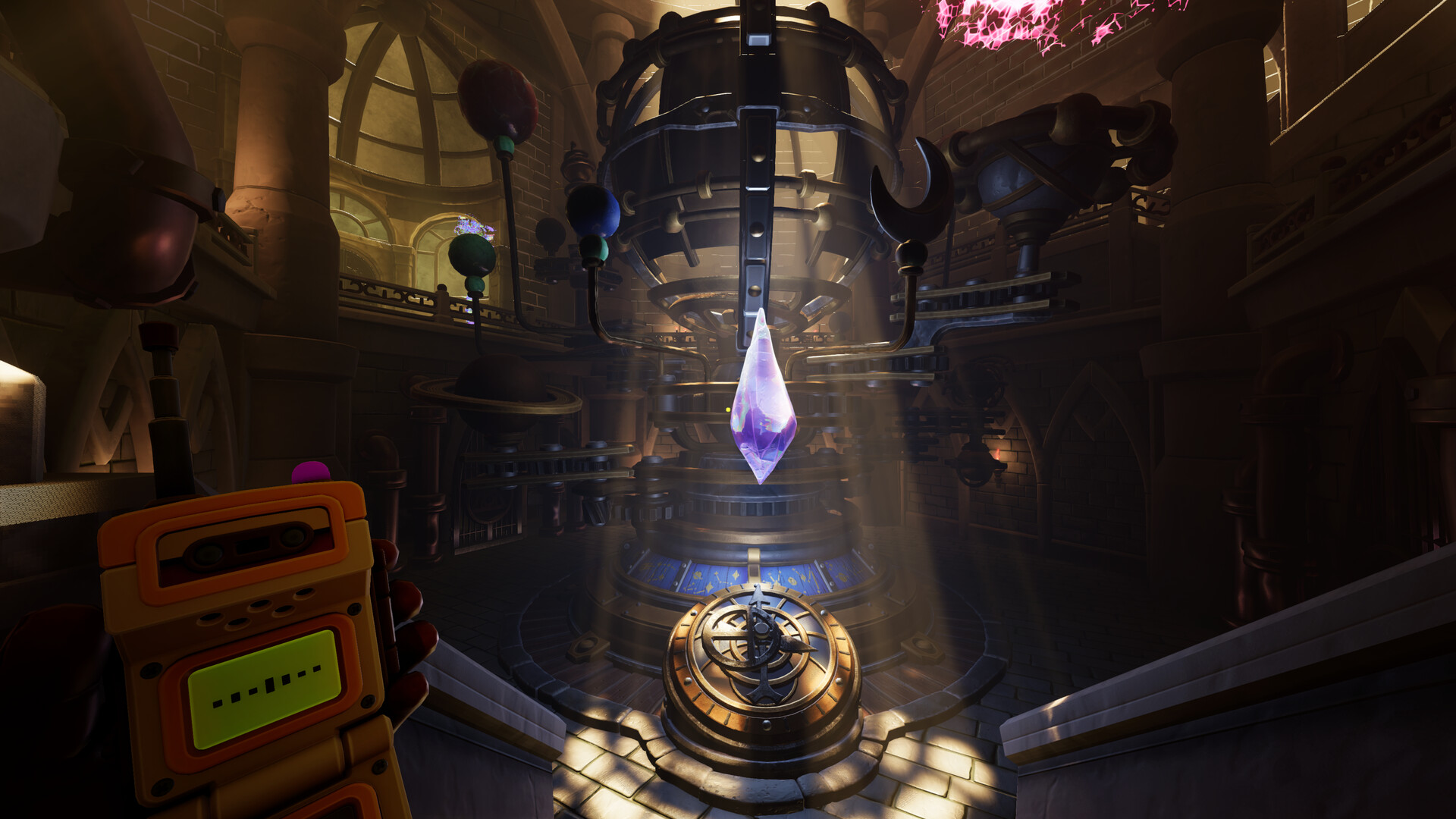
Official screenshot · Source: Steam store
The available references do not confirm how many chapters We Were Here Tomorrow contains. They also do not provide an official chapter-name list, individual chapter lengths, or a verified chapter-selection breakdown.
That distinction matters. A preview can describe numerous puzzles and environments without documenting the campaign’s complete structure. Similarly, a walkthrough creator might divide footage into episodes that do not match the game’s actual chapters.
As of October 21, 2026, the clearest supported answer is that the chapter total remains unverified in the available coverage, not that the game necessarily lacks chapters.
| Chapter question | What the available coverage establishes |
|---|---|
| How many chapters are there? | No verified total |
| What are the chapter names? | No complete list provided |
| How long is each chapter? | No chapter-by-chapter timing provided |
| Is chapter selection available? | Not established |
| Can completed chapters be replayed individually? | Not established |
| Are puzzle rooms equivalent to chapters? | No confirmed equivalence |
If you are comparing lists of We Were Here Tomorrow chapters, check how each list defines a chapter. Numbered video uploads, named puzzle rooms, and in-game campaign divisions are different things.
A useful chapter guide should identify its basis: an in-game heading, a menu entry, or clearly labeled editorial divisions. Without that distinction, an apparently precise count may tell you more about the guide’s formatting than the campaign itself.
What a chapter count would—and would not—tell you
Even a verified count would not establish how many evenings you need. In a cooperative puzzle adventure, one section might click immediately while another requires repeated explanations and experiments.
Use a future chapter list primarily to track your position and identify spoiler boundaries. Treat its timing estimates separately, especially if they come from players who already know the solutions.
How Long Is We Were Here Tomorrow?
A reliable full-game completion time is not established by the supplied references. The most substantial hands-on report describes six hours of play, but that number represents a preview session rather than a documented start-to-finish run.
In GameRant’s six-hour hands-on preview with creative director Martin Mittner, writer Josh Cotts explains that the session moved between different parts of the game. He also played alongside someone who knew the puzzles and could offer guidance.
Those conditions make the preview useful for understanding gameplay, but unsuitable for calculating a typical first-playthrough duration.
| Timing detail | What it means | What it does not prove |
|---|---|---|
| Six hours of hands-on play | The writer spent substantial time playing | The campaign takes six hours |
| Movement between different sections | Multiple parts of the game were sampled | The session followed the entire campaign |
| Developer participation | An experienced partner could provide guidance | Two newcomers would progress at the same speed |
| Increasing puzzle complexity | Later challenges can demand more coordination | Every later section takes longer |
| Traversal challenges between puzzles | Moving forward also involves cooperative problem-solving | A fixed amount of travel time per chapter |
Why the six-hour figure needs context
It would be misleading to present six hours as either the average completion time or a confirmed minimum. Because the preview skipped between sections, it does not establish how much continuous campaign content was completed.
For We Were Here Tomorrow chapters, the same limitation applies: six hours cannot be divided into an assumed chapter count to produce meaningful per-chapter estimates.
A trustworthy duration estimate would need a completed campaign run, a clear account of assistance or walkthrough use, and ideally several first-time teams for comparison. Until then, avoid making a one-night completion promise to your partner.
What Progression Actually Involves
Although a formal chapter breakdown is missing, the preview offers a useful picture of the experience between the beginning and end.
We Were Here Tomorrow is a first-person, two-player cooperative puzzle adventure from Total Mayhem Games. Its two Explorers awaken in a mysterious research facility beneath Antarctica’s ice, with little memory of how they arrived. They must complete work associated with a missing research team while uncovering the facility’s secrets.
The setting shifts the series toward science fiction, but communication remains central. Players are often separated, see different information, and rely on walkie-talkies to coordinate their actions.
Puzzles and traversal both contribute to progress
The preview describes a beam-redirection puzzle involving movable pylons and targets. It also highlights complementary abilities: one player can create blocks and platforms, while the other can pull objects and hook things together.
These abilities are not reserved for isolated puzzle rooms. They also turn spaces between puzzles into cooperative traversal challenges.
| Gameplay element | Supported example | What your team should expect |
|---|---|---|
| Information sharing | Separated players communicate by walkie-talkie | Describing observations is part of solving puzzles |
| Environmental reasoning | Pylons redirect a beam through targets | Understanding cause and effect matters |
| Block creation | Blocks can be stacked or placed to form platforms | Placement can affect available routes |
| Pulling and hooking | A complementary tool manipulates or connects objects | Your partner’s ability may complete your plan |
| Cooperative traversal | Abilities work together to overcome obstacles | Travel is not always passive downtime |
| Growing complexity | Puzzles become more demanding as play progresses | Early success does not guarantee an unchanged pace |
This helps explain why We Were Here Tomorrow chapters would be an imperfect measure of remaining playtime. Progress depends on both understanding a solution and communicating it well enough for two players to execute it.
The preview suggests that newcomers receive an accessible introduction to the mechanics. However, accessible does not mean effortless: even when one player understands the objective, both still have to contribute.
How to Plan Co-op Sessions Without a Verified Chapter List
Until a dependable breakdown of We Were Here Tomorrow chapters is available, plan around your shared availability rather than a promised number of completed sections.
The following schedule is a practical recommendation, not measured game-duration data. It gives your team room to learn, experiment, and stop without turning an unfinished puzzle into a scheduling problem.
| Session phase | Suggested time | Purpose |
|---|---|---|
| Setup and recap | 5–10 minutes | Check audio and remember the current objective |
| Focused play | 45–60 minutes | Work through puzzles while concentration is fresh |
| Optional continuation | 15–30 minutes | Keep playing if both partners have time and energy |
| Wrap-up | About 5 minutes | Record useful observations and check saving behavior |
Do not assume that completing a room automatically creates a safe stopping point. The reference material does not establish checkpoint frequency, manual-save options, or the exact conditions for preserving progress. Check the game’s actual save indicators and menus before ending a session.
Make a brief end-of-session note
A short recap can reduce the time spent reconstructing your thinking next time. Record:
- Your current objective.
- The most important objects or clues each player can see.
- Which ideas you tested and what happened.
- Any unresolved question about your abilities or route.
- Whether the game visibly confirmed saved progress.
Keep observations separate from guesses. “The beam reaches the second target” is useful evidence; “we must need three more switches” is only a theory unless the game supports it.
Agree on a hint policy first
Before starting, decide how your team wants to handle a prolonged roadblock. You might prefer a gentle nudge, a full solution, or no outside help.
If you consult a guide, search for the specific obstacle rather than scrolling through an entire campaign walkthrough. This limits accidental story spoilers and avoids exposing solutions to challenges you have not reached.
What Can Make Your Playthrough Faster or Slower?
The most useful duration variable is not simply puzzle experience. It is how effectively two people combine their observations.
The preview emphasizes that one knowledgeable player cannot replace the other’s contribution. Both partners must understand enough of the task to perform their roles.
Use consistent descriptions
Pick shared names for important objects. If one person says “pylon,” another says “tower,” and both also use “machine” for something else, a simple instruction can become confusing.
Try a consistent description order:
- Object: What are you looking at?
- Location: Where is it relative to a shared reference?
- State: What is it doing right now?
- Action: What should your partner change?
For example: “The left pylon is pointing toward the wall; rotate it toward the middle target.” That is more actionable than “move that thing over there.”
Change one thing at a time
When both players alter several objects simultaneously, it becomes harder to identify which action caused a result. Test one adjustment, report the outcome, and then choose the next step.
This is a general puzzle-solving recommendation, not a requirement imposed by the game. It is especially useful when you are trying to understand an unfamiliar interaction.
Account for exploration and learning
Your team’s pace may also depend on:
- Environmental exploration: Looking around and enjoying the setting takes time.
- Ability familiarity: New tools require experimentation before their possibilities become obvious.
- Communication habits: Clear explanations can reduce repeated attempts.
- Outside assistance: Solutions can shorten a roadblock but change the discovery experience.
- Fatigue: A break may help more than another rushed attempt.
When evaluating future We Were Here Tomorrow chapters guides, look for these conditions alongside any timing claims. A practiced replay and a blind first run answer different questions.
For now, the sensible approach is to reserve flexible co-op sessions and track your own progress. An unverified hour estimate is less useful than knowing when both players can return.
FAQ: We Were Here Tomorrow Chapters and Duration
How many We Were Here Tomorrow chapters are there?
The available references do not establish a verified chapter count or complete chapter-name list. Treat numbered walkthrough episodes as editorial divisions unless the creator shows that they correspond to actual in-game chapters.
Does We Were Here Tomorrow take six hours to beat?
That is not confirmed. The six-hour figure comes from a hands-on preview that moved between sections and paired the writer with the game’s creative director. It should not be presented as a full campaign completion time.
How long does each chapter take?
No reliable chapter-by-chapter timings appear in the supplied coverage. Any useful estimate would need confirmed chapter boundaries and documented playthrough conditions, including whether both players were new and whether they used solutions.
Do you need to play the earlier games first?
The hands-on preview presents Tomorrow as approachable for newcomers, with an introduction to its puzzle mechanics and references for returning fans. Earlier series experience may help you recognize the communication-focused format, but the preview does not suggest that it is necessary to begin playing.
Related Guides
We Were Here Tomorrow demo length: What to Know
We Were Here Tomorrow demo length explained: three puzzles, no confirmed runtime, co-op requirements, and the original Steam availability window.
We Were Here Tomorrow how long to beat: Playtime Guide
Find the latest We Were Here Tomorrow completion-time status, what affects playtime, and how to plan your two-player puzzle sessions.
We Were Here Tomorrow length: How Long to Beat?
Looking for We Were Here Tomorrow length? See what is confirmed about completion time, co-op pacing, replay value, and planning your first run.
We Were Here Tomorrow release date demo: Launch Guide
Get We Were Here Tomorrow's release date, limited-time demo details, Steam price, co-op requirements, and PC specs before teaming up.
We Were Here Tomorrow demo walkthrough: Guide & Tips
Find the right We Were Here Tomorrow demo walkthrough, avoid wrong-game solutions, and use a practical checklist to work through co-op puzzles.