We Were Here Tomorrow how many players: Co-op Guide
We Were Here Tomorrow requires exactly two players. Learn how online co-op works, what you need to play, and how to prepare with your partner.
How Many Players Can Play We Were Here Tomorrow?
Bring one partner—not an entire squad—because We Were Here Tomorrow requires exactly two players. If you’re searching “We Were Here Tomorrow how many players” before organizing game night, that limit matters: this is a co-op-only puzzle adventure, not a solo game with optional multiplayer. The short answer to “We Were Here Tomorrow how many players” is you and one other person, playing online and communicating to solve puzzles.
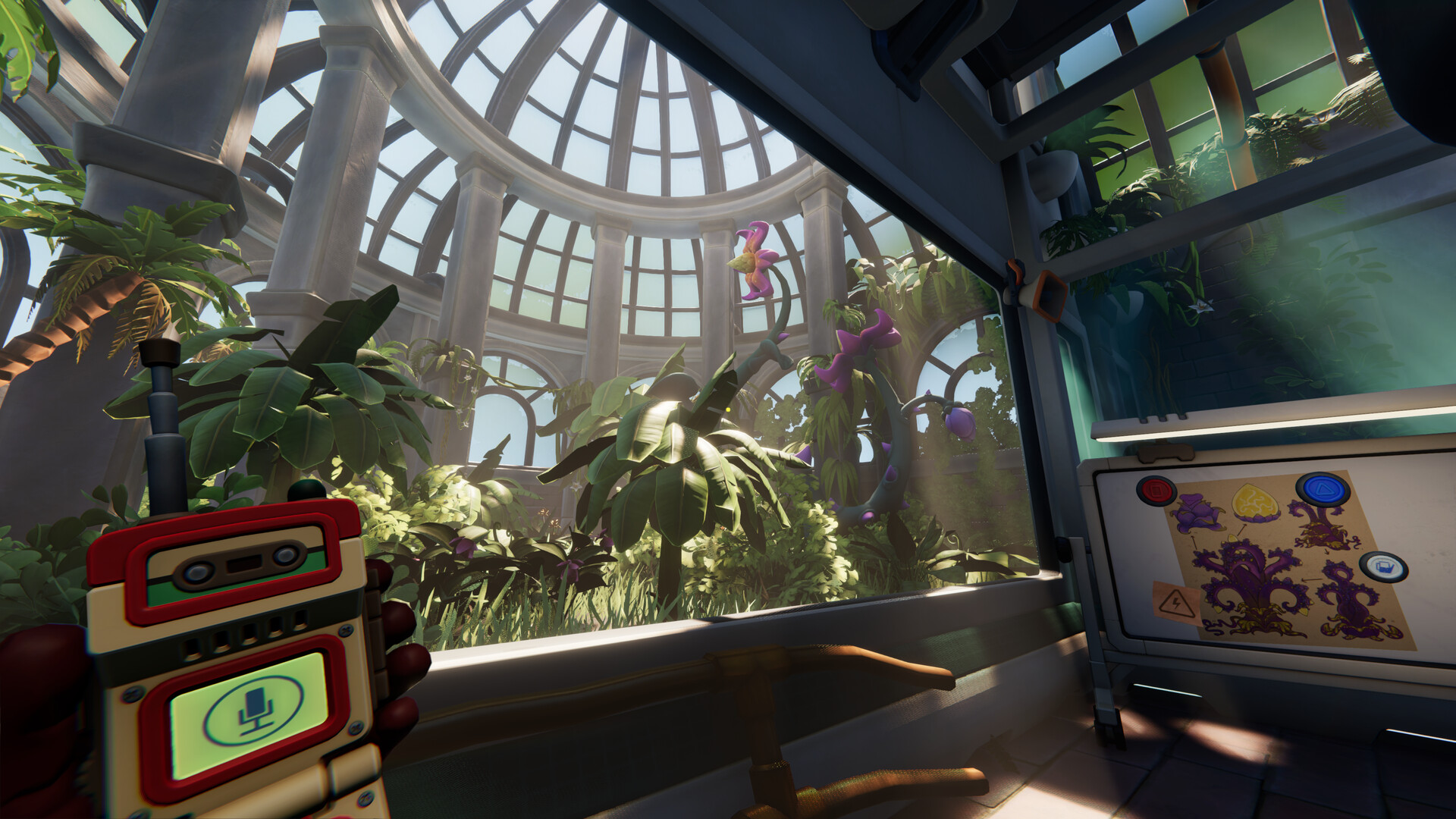
Official screenshot · Source: Steam store
Total Mayhem Games builds the adventure around two distinct perspectives. Each explorer contributes information, actions, and equipment that the other needs, so your partner is essential rather than an extra pair of hands.
Here are the main details to know before making plans:
| Question | Answer |
|---|---|
| How many players are required? | Exactly two |
| What is the maximum player count? | Two players per session |
| Can three or four people join together? | No |
| Is the game playable solo? | No; it is co-op only |
| What multiplayer format is listed? | Online co-op |
| Is cross-platform multiplayer listed? | Yes, on Steam |
| What communication equipment is required on PC? | A working PC-compatible microphone for each player |
| Is an internet connection required? | Yes, for both players |
The official We Were Here Tomorrow Steam listing confirms the two-player roles, online co-op format, microphone requirement, and internet requirement. It lists the release date as October 20, 2026.
Why the Adventure Requires Exactly Two Players
The useful answer to “We Were Here Tomorrow how many players” goes beyond a lobby limit. The puzzles themselves are designed for a pair.
You and your partner awaken inside a mysterious Norček Industries facility. Progress depends on exploring its spaces, sharing discoveries, and combining information that neither explorer can use effectively alone.
This is asymmetrical co-op: the two players do not necessarily see the same clues, access the same controls, or perform the same tasks.
Different information creates the challenge
Imagine finding a panel with several unfamiliar symbols while your partner finds the information explaining their order. You can interact with the panel, but your partner has the context needed to operate it correctly.
The challenge becomes a conversation:
- What does each symbol look like?
- Are you describing them from left to right?
- Which controls can each person actually use?
- Did an action change something on the other side?
That exchange is the gameplay, not an interruption between puzzles.
Both players have active responsibilities
The official description gives each explorer a distinct role and a high-tech tool. Those differences allow the pair to overcome obstacles neither could handle alone.
Player experience: The supplied gameplay footage shows this cooperation through symbol descriptions, coordinated mechanisms, and interactions involving different tools. It also shows that the players sometimes explore together rather than remaining separated throughout the adventure.
| Co-op element | What it means for your session |
|---|---|
| Separate perspectives | Your partner may have information you cannot see |
| Different controls | A clue on your side may explain a mechanism on theirs |
| Distinct equipment | Certain obstacles require cooperation between tools |
| Coordinated actions | Some mechanisms need both players to participate |
| Shared exploration | Being in the same room does not remove the need for teamwork |
If you are choosing between a two-person puzzle night and a four-person party game, this distinction is important. We Were Here Tomorrow is built around a focused partnership, not a larger group splitting up objectives.
Solo Play, Larger Groups, and Local Co-op
Several questions commonly sit behind “We Were Here Tomorrow how many players”: Can you play alone? Can a third friend join? Can two people share one screen?
Here is how to interpret the available information without confusing confirmed features with assumptions.
Can you play We Were Here Tomorrow alone?
No. The official listing explicitly identifies the game as co-op only.
You should not buy it expecting a single-player campaign. The described experience requires another person to contribute their perspective and actions.
The supplied sources do not establish an AI-controlled partner or a solo alternative. Plan around having a real teammate available whenever you want to progress.
Can three or four players join one session?
No. The game supports a two-person team.
For a group of four, the practical option is to organize two separate pairs. That creates two independent playthroughs rather than one shared four-player campaign.
If you compare progress afterward, avoid revealing puzzle answers to the other pair. Discovering how to describe an unfamiliar object is part of the fun.
Is there split-screen or couch co-op?
The Steam listing identifies online co-op, but it does not list shared-screen or split-screen co-op.
That means you should not plan on two people playing together on one PC through a local split-screen mode. The supported format described by the official source is an online connection between players.
| Planned setup | What to expect |
|---|---|
| One person playing alone | Not supported; co-op is required |
| Two people playing online | The intended format |
| Three people in one session | Not supported |
| Four friends divided into two pairs | Two separate co-op sessions |
| Two people sharing one PC screen | Local split-screen is not listed |
| Players connecting across platforms | Cross-platform multiplayer is listed; check your intended pairing |
The takeaway for “We Were Here Tomorrow how many players” is straightforward: count two active players, then verify the connection setup separately. Player count, local multiplayer, and crossplay are different questions.
What Both Players Need Before Starting
Once you have answered “We Were Here Tomorrow how many players,” the next step is making sure both people are ready to connect.
For PC players, the official requirements include a working PC-compatible microphone and a broadband internet connection. Communication is central enough that a microphone appears in both the minimum and recommended system requirements.
Check the essentials together
Do not leave preparation entirely to the person hosting. Both players need to hear, speak, connect, and run the game reliably.
| Preparation step | What each player should check | Why it matters |
|---|---|---|
| Confirm your teammate | Agree on a two-person session | There is no solo fallback described |
| Verify game access | Check that both accounts can launch the game | Avoid discovering an access issue at session time |
| Check multiplayer compatibility | Confirm the intended platform pairing | A crossplay label does not explain every setup detail |
| Test microphones | Speak and confirm that your partner hears you | Clue descriptions are essential |
| Check the connection | Make sure internet access is stable | Online co-op requires connectivity |
| Review PC requirements | Compare your hardware with the listing | Both machines need to run the adventure |
The provided material does not establish a free friend pass or a one-purchase sharing arrangement. Do not assume one purchase automatically gives your partner access. Check the current purchase options before buying.
Know the main PC requirements
You do not need to memorize the entire hardware listing, but these are useful starting points:
- Operating system: Windows 11.
- Minimum memory: 8 GB RAM.
- Recommended memory: 16 GB RAM.
- Available storage: 25 GB.
- Graphics API: DirectX 12.
- Additional equipment: A working PC-compatible microphone.
The listed minimum graphics hardware is an Nvidia GTX 1660 Ti 6 GB or equivalent; the recommended option is an Nvidia GeForce RTX 3060 or equivalent. Check the full requirements against both PCs rather than assuming one successful installation means the whole team is ready.
Tips for a Better Two-Player Co-op Session
Knowing the answer to “We Were Here Tomorrow how many players” gets you into the right-sized team. Good communication makes that team effective.
You do not need identical puzzle-solving skills. You do need a shared way to describe what you see and confirm what happens.
Establish directions before operating a mechanism
“Left” is not always clear when two players face a puzzle from different angles.
Before giving a sequence, agree on a reference point: left to right on the panel, top to bottom on the display, or compass directions where appropriate. For grids, assign letters to columns and numbers to rows.
Player experience: The supplied footage includes confusion over directions and grid orientation. Establishing a coordinate system early can prevent repeated attempts based on a correct clue interpreted backward.
Separate observations from guesses
There is a useful difference between:
- “The light turned blue.”
- “I think blue means we finished this step.”
The first is an observation. The second is a theory.
Share both, but identify which is which. Otherwise, your partner may build an entire solution around an assumption you have not tested.
Use consistent names for unfamiliar symbols
Inventing nicknames is often easier than describing every curve repeatedly. Once you agree that a symbol resembles a butterfly, keep calling it that.
If two symbols look similar, add a distinguishing detail: “butterfly with two loops” is more useful than switching between several unrelated descriptions.
Change one thing at a time when stuck
Random inputs can obscure what a mechanism does. Instead:
- Describe the current state.
- Announce the action you will take.
- Perform that action.
- Ask what changed on your partner’s side.
- Update your theory before trying another input.
Player experience: The gameplay footage shows multiple moments when one explorer’s input affects the other explorer’s environment. A short confirmation after each action helps connect cause and effect.
Finally, choose someone comfortable with trial and error. This is an escape-room-style partnership: patience and clear explanations are more useful than trying to race ahead alone.
FAQ
We Were Here Tomorrow how many players: Is it exactly two?
Yes. We Were Here Tomorrow requires exactly two players, with a maximum of two in a session. The official description assigns the explorers different roles and equipment, making cooperation part of the puzzle design rather than an optional feature.
Can you play We Were Here Tomorrow without a microphone?
The official PC listing requires both players to have working PC-compatible microphones. Since players must describe clues and coordinate actions, you should prepare to use voice communication rather than assume silent play will be practical or supported.
Does We Were Here Tomorrow support crossplay?
The Steam page lists cross-platform multiplayer. Before purchasing specifically for crossplay, confirm that your intended platforms can connect and check the current joining instructions. The feature label confirms cross-platform support but does not explain every platform-specific requirement.
Do you need to play the earlier We Were Here games first?
No. The official description presents the series entries as standalone online co-op adventures. Their stories connect, but playing them in order is not required. You can start with Tomorrow—as long as you bring one partner, working microphones, and internet connections.
Related Guides
We Were Here Tomorrow co op: Setup, Tips & Gameplay
Explore We Were Here Tomorrow co op requirements, puzzle mechanics, beginner tips, PC specs, and what to know before playing with a partner.
We Were Here Tomorrow crossplay: Platform Guide
We Were Here Tomorrow crossplay supports PC, PS5, and Xbox Series X|S. See platform pairings, co-op requirements, and practical setup tips.
We Were Here Tomorrow friend pass: Co-op Access Explained
Is a We Were Here Tomorrow friend pass confirmed? Learn what the official announcement says about co-op access, crossplay, and playing with a friend.
We Were Here Tomorrow release date demo: Launch Guide
Get We Were Here Tomorrow's release date, limited-time demo details, Steam price, co-op requirements, and PC specs before teaming up.
We Were Here Tomorrow demo walkthrough: Guide & Tips
Find the right We Were Here Tomorrow demo walkthrough, avoid wrong-game solutions, and use a practical checklist to work through co-op puzzles.